Rowing Intervals
Repeated hard efforts on the rowing machine separated by easy paddling, with stroke sequence held under fatigue.
How to do it
- Strap your feet in and set the damper to a moderate setting so the stroke stays quick rather than heavy.
- Row easy for a few minutes, then settle at the catch with shins vertical, arms straight and shoulders ahead of the hips.
- Start the work bout by driving the legs down hard while the arms stay straight until the legs are almost flat.
- Swing the back open from the hips and pull the handle in to the bottom of the ribs to finish the stroke.
- Send the hands away first, hinge the body forward, then let the knees bend and slide back to the catch.
- Hold that sequence for the full work bout, then drop to light paddling for the recovery and repeat.
Key technique cue
Legs, then body, then arms on the drive — reverse it on the recovery.
Common mistakes
- ✕ Opening the back at the same time as the legs, which strains the lower back and leaks power out of the drive.
- ✕ Rushing the recovery to match the drive, which shortens the next stroke and burns you out before the bout ends.
- ✕ Chasing stroke rate instead of split, so the rate climbs while the pace on the monitor gets slower.
- ✕ Sitting still through the rest, which slows waste clearance and leaves the legs heavy for the next effort.
Benefits
- ✓ Trains anaerobic work capacity at a power output continuous rowing never reaches.
- ✓ Loads upper and lower body in the same interval, which running and cycling intervals do not.
- ✓ Stays non-impact, so repeated hard efforts cost the joints far less than sprint running.
Progression: from easier to harder
-
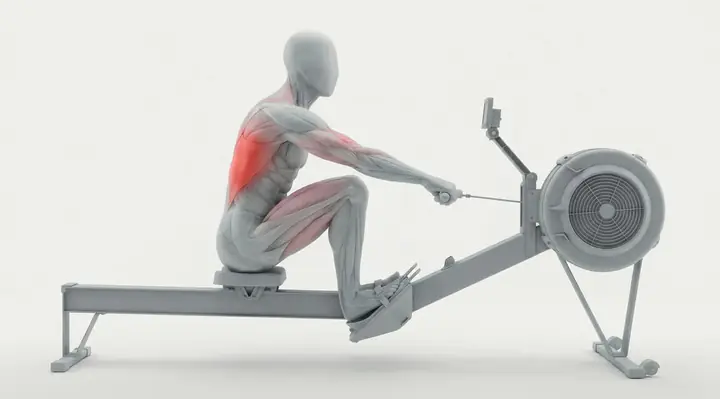 Step 1
-
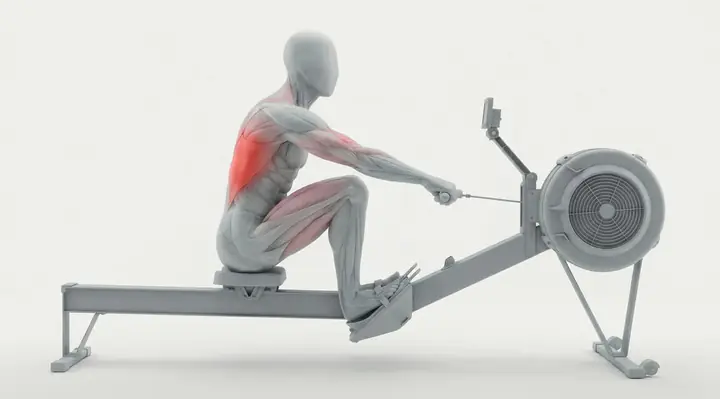 Step 2
-
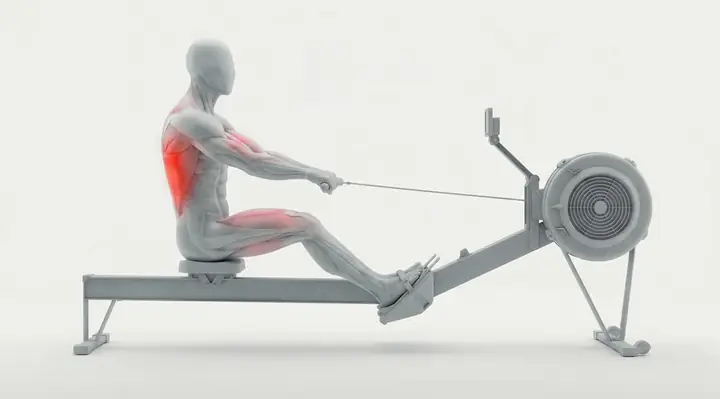 Step 3 You are here
- Rowing Intervals
About the exercise
Rowing intervals run the same four-phase stroke as continuous rowing at a pace you could not hold for a whole piece. Each drive starts with the legs, adds the back swing, then finishes with the arms, and the recovery reverses that order at half the speed. Rowing is a pushing sport far more than a pulling one, and intervals are where that breaks first, because tired rowers open the back and the legs together. Interval work means short hard bouts with active recovery between them, and the erg suits that because pieces can be set by distance or by time.
Updated
A week of training and meals built for you
Workoutify plans workouts around your days, time and equipment — and a menu for your goal and macros.