Band Pull-Through
A hip hinge that pulls a low-anchored band forward between the legs, driving the glutes with little spinal load.
How to do it
- Anchor a resistance band low on a squat rack or other solid post and face away from the anchor.
- Straddle the band, reach between your legs, and take the band in both hands.
- Walk forward until the band is taut, then set the feet about hip-width apart.
- Push the hips back and hinge forward with a flat back until the hands pass behind the legs.
- Drive the hips forward and squeeze the glutes to stand tall, keeping the arms straight.
- Control the return as the band pulls you back into the hinge, then repeat.
Key technique cue
Send the hips back instead of squatting, and pull with the hips, not the arms.
Common mistakes
- ✕ Squatting the knees forward instead of sitting the hips back.
- ✕ Pulling with the arms instead of letting the hips do the work.
- ✕ Rounding the lower back as the band tugs from behind.
- ✕ Standing too close to the anchor so the band goes slack at the bottom.
Benefits
- ✓ Loads hip extension from behind, so the glutes work without a bar on the back.
- ✓ Teaches the hinge with accommodating band tension that peaks at lockout.
- ✓ Fits home and garage setups that have a band and a low anchor.
Progression: from easier to harder
-
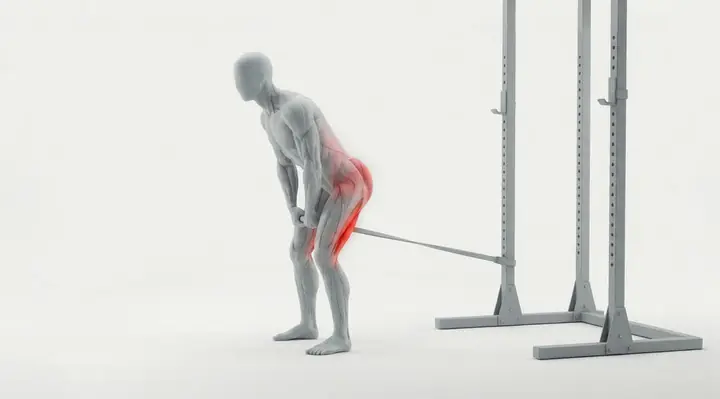 Step 1 You are here
- Band Pull-Through
- Cable Pull Through
About the exercise
The band pull-through is the elastic version of the cable pull-through. A band is anchored low behind the lifter, passed between the legs, and held in both hands. The hips sit back into a hinge, then drive forward to stand while the arms stay long. Because the line of pull comes from behind, the glutes and hamstrings work through a long hip-extension range and the spine carries little compressive load.
Updated
Similar exercises

A week of training and meals built for you
Workoutify plans workouts around your days, time and equipment — and a menu for your goal and macros.