Cable Single Arm Rear Delt Row
A standing one-arm cable row at shoulder height, pulling a pronated handle out and back to load the rear deltoid.
How to do it
- Set a D-handle on a cable pulley at about shoulder height.
- Stand side-on to the stack, hold the handle in the far hand with a pronated grip, and rest the free hand on the torso.
- Step out until the cable is taut and the working arm is straight at shoulder height.
- Brace the trunk so the torso does not rotate toward the stack.
- Pull the elbow out and back at shoulder height until the hand approaches the chest.
- Extend the arm forward under control and repeat, then switch sides.
Key technique cue
Elbow at shoulder height, no torso twist; keep the shoulder off the ear.
Common mistakes
- ✕ Dropping the elbow below shoulder height, which hands the row to the lats.
- ✕ Twisting the torso to move the stack instead of rowing with the shoulder.
- ✕ Using a hammer or supinated grip that changes the rear-delt line.
- ✕ Shrugging the working shoulder up toward the ear.
Benefits
- ✓ Targets the rear deltoid one arm at a time with constant cable tension.
- ✓ Lets you match left and right volume when one side lags.
- ✓ Fits a standard cable tower.
Progression: from easier to harder
-
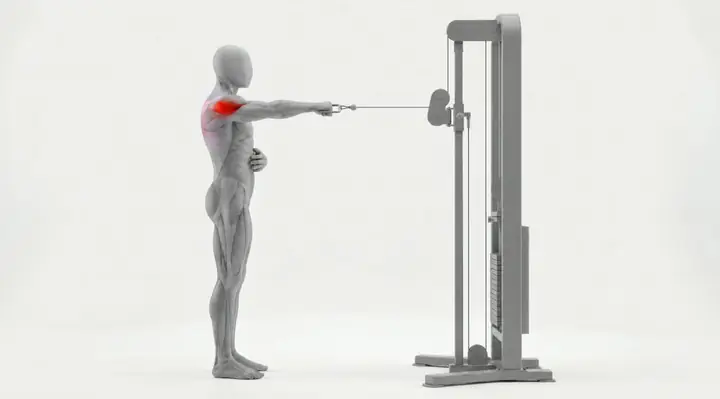 Step 1 You are here
- Cable Single Arm Rear Delt Row
-
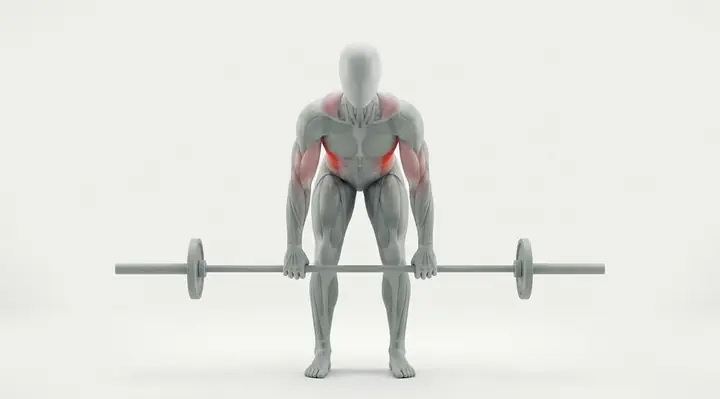 Step 2
About the exercise
The cable single-arm rear delt row keeps the upper arm near shoulder height and pulls the elbow out and back so the posterior deltoid, not the lats, does the row. It is an auxiliary compound pull with the posterior deltoid as the target and mid traps, low traps, rhomboids, and lateral deltoid as synergists. It is done standing, not seated: the working arm is straight out at shoulder height on a horizontal cable, with a pronated D-handle and the free hand on the torso.
Updated
Similar exercises
A week of training and meals built for you
Workoutify plans workouts around your days, time and equipment — and a menu for your goal and macros.