Band Shoulder Dislocates
A standing shoulder-mobility pass-through that arcs a light band from the thighs, overhead, and behind the body.
How to do it
- Stand tall with the feet about shoulder-width apart and hold a light band in front of the thighs with a wide overhand grip.
- Brace the trunk and keep the ribs down so the lower back does not arch.
- Keep both arms straight and lift the band in an arc up and over the head.
- Continue the arc behind the body until the band reaches the lower back or the glutes, or stop at a pain-free end range.
- Reverse the same path back overhead and down to the thighs.
- Widen the grip if the elbows start to bend, and only narrow it as mobility improves.
Key technique cue
Elbows straight all the way; if they bend, take a wider grip.
Common mistakes
- ✕ Bending the elbows to cheat the band behind the back.
- ✕ Arching the lower back instead of moving from the shoulders.
- ✕ Using a band that is too heavy, which forces the joint instead of stretching it.
- ✕ Gripping too narrow and pushing through a painful end range.
Benefits
- ✓ Opens shoulder flexion and extension through a full overhead arc.
- ✓ The band's stretch is more joint-friendly than a rigid pipe for tight shoulders.
- ✓ Warms the rotator cuff and delts before pressing and overhead work.
Progression: from easier to harder
-
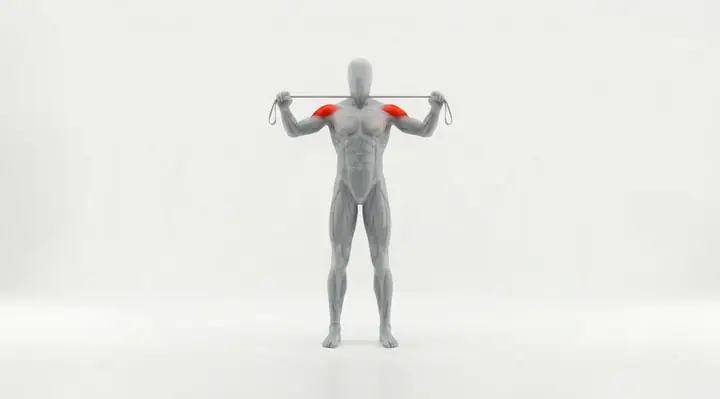 Step 1 You are here
- Band Shoulder Dislocates
-
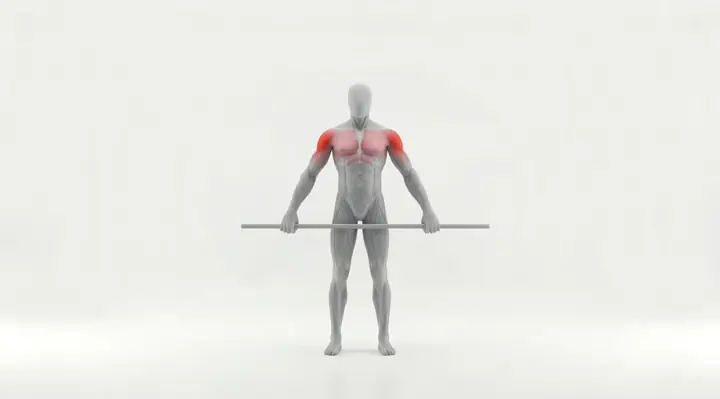 Step 2
About the exercise
Band shoulder dislocates, also called pass-throughs, take a light band from in front of the thighs, over the head, and down behind the hips with straight arms, then reverse the path. The band can stretch, so the drill is more forgiving than a rigid PVC pipe. Deltoids and rotator-cuff muscles control the arc; the chest and lats get a stretch as the band travels behind the body. This is a warm-up and mobility drill, not a loaded raise. It fits shoulder prep before pressing, Olympic lifts, and overhead squats.
Updated
Similar exercises
A week of training and meals built for you
Workoutify plans workouts around your days, time and equipment — and a menu for your goal and macros.