Dumbbell Windmill
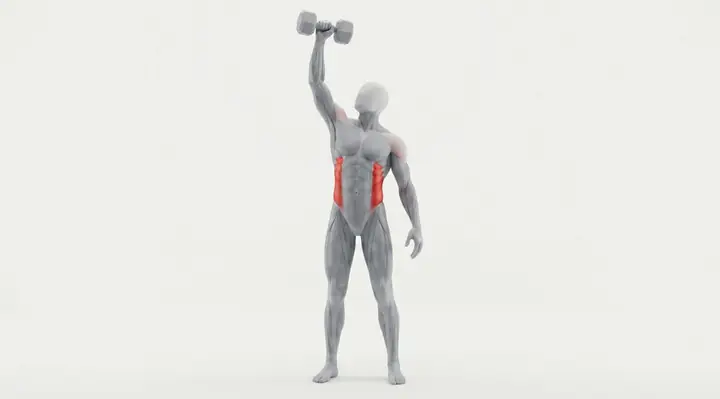
Overhead hinge that keeps one dumbbell stacked while the free hand reaches down the inside of the leg.
How to do it
- Stand with the feet apart and one dumbbell locked out overhead in a straight arm.
- Turn both feet slightly away from the loaded side and pack the overhead shoulder.
- Push the hip on the loaded side back and let the free hand slide down the inside of the near leg.
- Hinge and rotate only as far as the overhead arm stays stacked and the spine stays long.
- Drive the hip forward to stand while the dumbbell stays over the shoulder.
- Reset the feet and switch sides after the set.
Key technique cue
Keep the dumbbell over the shoulder, eyes on it, loaded hip back.
Common mistakes
- ✕ Squatting the knees instead of hinging the loaded hip back.
- ✕ Collapsing into a side bend and losing the overhead stack.
- ✕ Letting the dumbbell drift in front of or behind the shoulder.
- ✕ Forcing the free hand to the floor past available hamstring range.
Benefits
- ✓ Trains overhead shoulder stability while the hips and trunk move underneath the load.
- ✓ Opens the hamstrings and glutes in a loaded hinge that is not a deadlift.
- ✓ Gives a dumbbell option when a kettlebell is not available.
Progression: from easier to harder
-
 Step 1 You are here
- Dumbbell Windmill
- Kettlebell Windmill
About the exercise
The windmill holds a load overhead and moves the body underneath it. The pattern is a hip hinge with a slight torso rotation, the free hand tracking the inside of the opposite leg, and a return driven by the glute on the loaded side. The overhead shoulder stays stacked; the obliques and abdominals resist collapse; the glutes and hamstrings take the stretch and the stand.
Updated
Similar exercises
-
 Intermediate Deficit Dumbbell Romanian Deadlift
-
 Intermediate Dumbbell Cross Body Romanian Deadlift
-
 Intermediate Turkish Get-Up (Dumbbell)
-
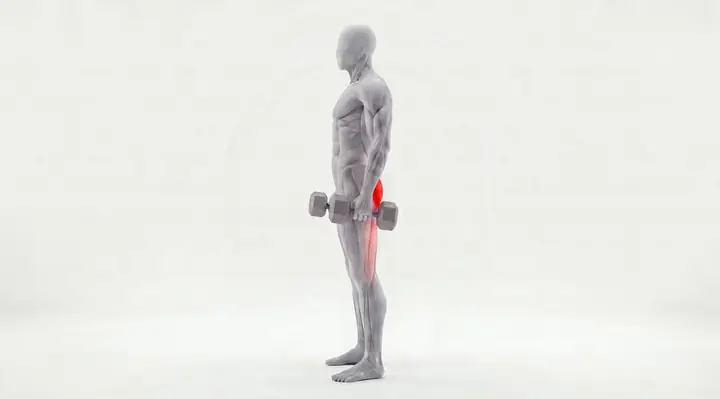 Intermediate Hip Hinge Speed Romanian Deadlift
-
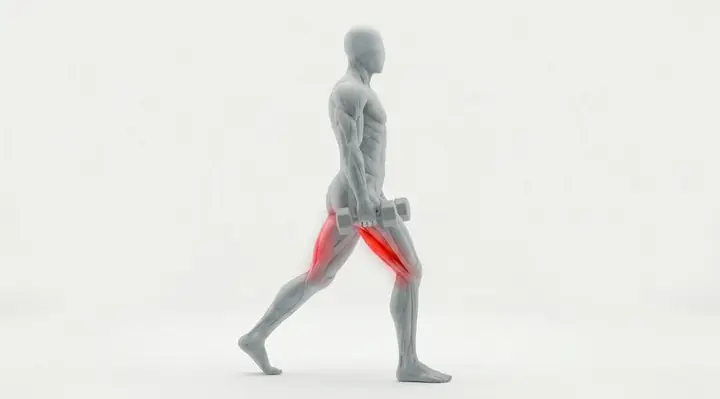 Intermediate Kickstand Dumbbell Romanian Deadlift
-
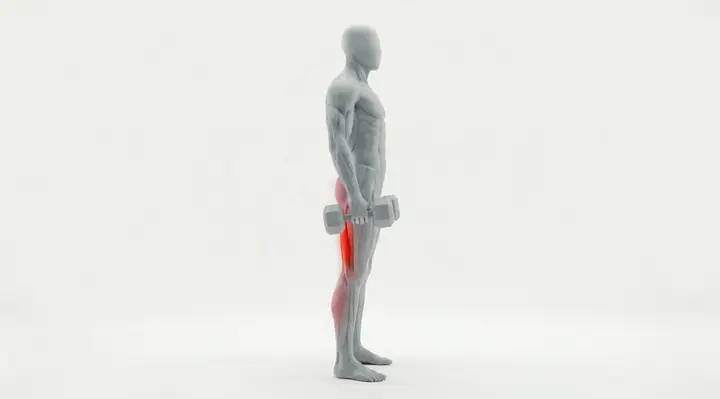 Beginner Dumbbell Deadlift
- Beginner Dumbbell Romanian Deadlift
-
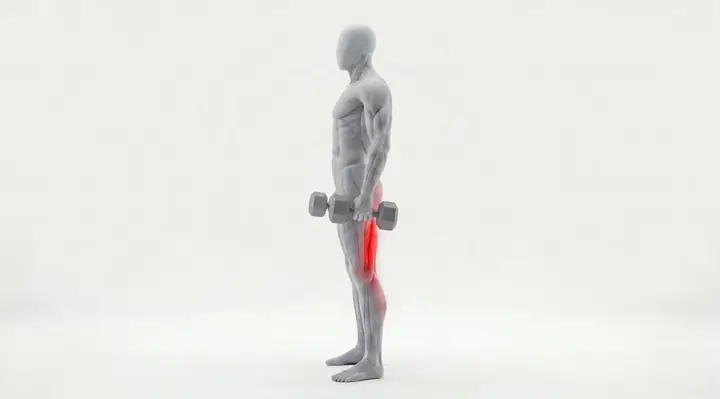 Advanced Single-Leg Dumbbell Romanian Deadlift
A week of training and meals built for you
Workoutify plans workouts around your days, time and equipment — and a menu for your goal and macros.