Reverse Pec Deck
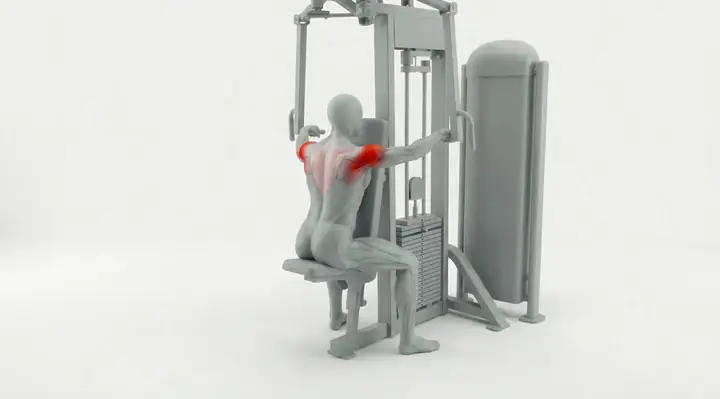
Chest-supported machine fly performed in reverse, opening the arms backward to load the rear deltoids.
How to do it
- Set the seat height so the handles sit level with your shoulders and select a light load.
- Sit facing the machine with your chest against the pad and your feet flat on the floor.
- Take a handle in each hand with a pronated or neutral grip and hold a fixed bend in the elbows.
- Sweep both arms out and back until they reach roughly shoulder height in line with your torso.
- Hold the end position for a beat without shrugging or pushing your head forward.
- Return the handles slowly to the start under control, then repeat.
Key technique cue
Chest on the pad, soft elbows; sweep the arms out rather than pinching the blades.
Common mistakes
- ✕ Driving the movement by squeezing the shoulder blades turns a rear-delt fly into a rowing pattern.
- ✕ Letting the head jut forward as the arms open loads the neck and signals a load that is too heavy.
- ✕ Bending and straightening the elbows through the rep converts the fly into a partial row.
- ✕ Pulling the chest off the pad to gain range restores the trunk demand the machine was chosen to remove.
Benefits
- ✓ Isolates the rear deltoid, a group that most pressing-heavy programs leave underworked.
- ✓ Chest support removes the trunk stability demand of bent-over reverse fly variations.
- ✓ Fixed path makes light, high-repetition shoulder work easy to standardize across users.
Progression: from easier to harder
-
 Step 1 You are here
-
 Step 2
-
 Step 3
About the exercise
The reverse pec deck reverses the pec deck to train the back of the shoulder. You sit facing the pad with the handles at torso height and sweep the arms outward and back with the elbow angle fixed. The posterior deltoid does the horizontal shoulder abduction, with the trapezius and mid-back muscles assisting near end range. The chest pad is what makes it useful. It removes the trunk stability demand of a bent-over reverse fly, and the cue is to move at the shoulder socket rather than squeeze the shoulder blades together.
Updated
Similar exercises
A week of training and meals built for you
Workoutify plans workouts around your days, time and equipment — and a menu for your goal and macros.