Barbell Walking Lunge
A traveling forward lunge with a barbell on the traps, stepping through each rep instead of returning to a standing start.
How to do it
- Unrack a barbell across the upper traps and walk into a clear lane.
- Stand tall with the feet about hip-width apart and brace the trunk.
- Step one foot forward and bend both knees as you drop.
- Lower until the rear knee is just above the floor and both knees are near 90 degrees.
- Drive through the front foot, stand, and step the rear leg through into the next lunge.
- Keep alternating down the lane without pausing in a feet-together stance.
Key technique cue
Don't bring the back foot to the front one; carry it straight into the next step.
Common mistakes
- ✕ Returning the rear foot to a standing start instead of walking through.
- ✕ Letting the front knee cave in as you step.
- ✕ Leaning the torso forward under the bar.
- ✕ Taking such a long stride that you cannot control the drop.
Benefits
- ✓ Loads a gait-like lunge that an in-place lunge does not.
- ✓ Builds single-leg strength and trunk stiffness under a moving bar.
- ✓ Lets programs prescribe distance or steps instead of only pairs of reps.
Progression: from easier to harder
-
 Step 1
-
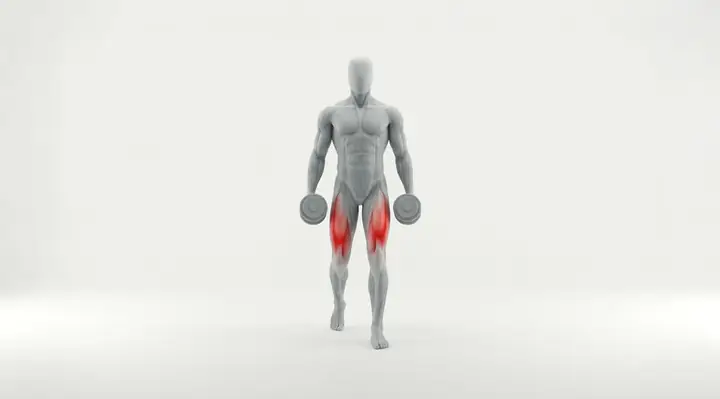 Step 2
-
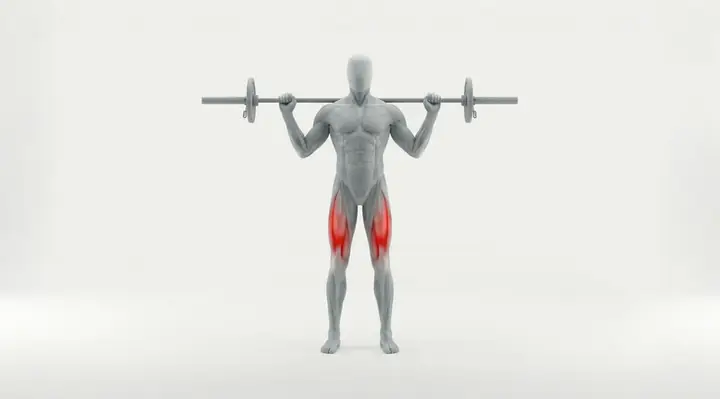 Step 3 You are here
- Barbell Walking Lunge
About the exercise
The barbell walking lunge is the in-place barbell lunge taken on the move. The bar sits on the traps, you step forward, drop both knees, then drive through the front foot and bring the rear leg through into the next stride. It is an advanced progression of the barbell lunge, with the quads as the target and glutes, hamstrings, adductors, calves, and the trunk as secondary. The same drop and heel drive apply; the walking version just does not return to a feet-together start. It is the traveling version, suited to conditioning-style leg work and gyms with a long clear lane.
Updated
Similar exercises
-
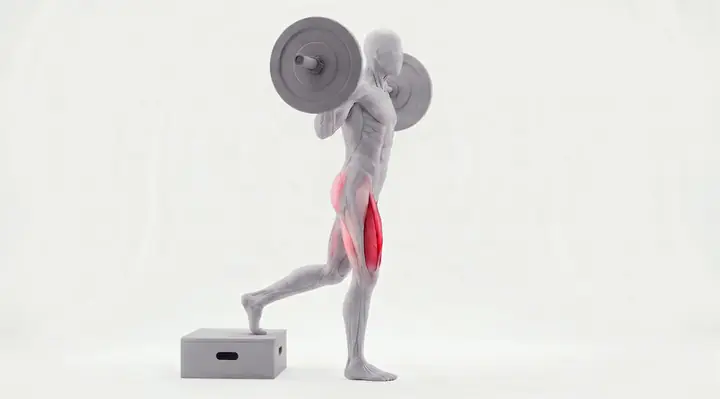 Advanced Barbell Bulgarian Split Squat
-
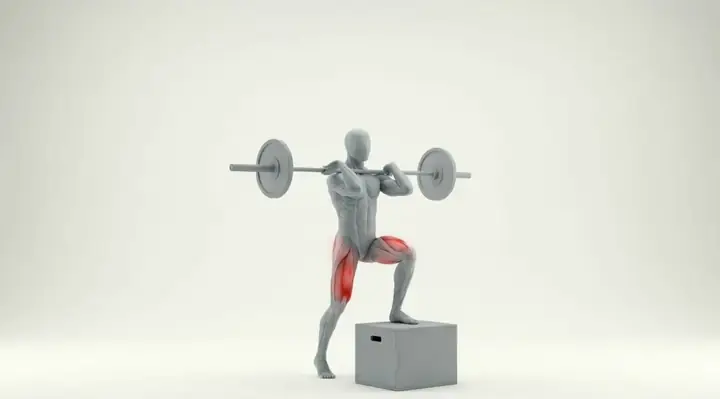 Intermediate Barbell Front Rack Step Up Knee Drive
-
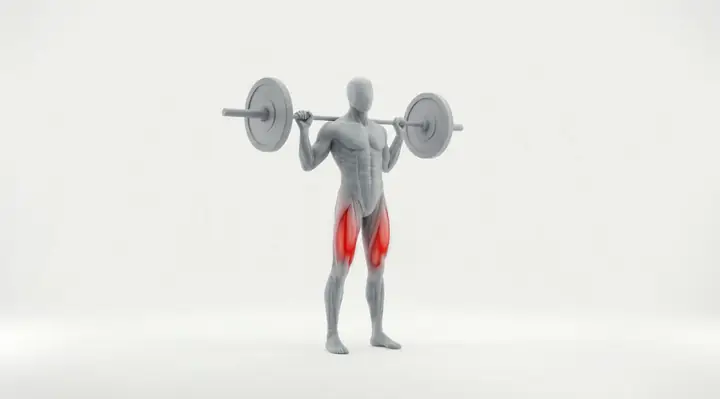 Intermediate Barbell Lunge
-
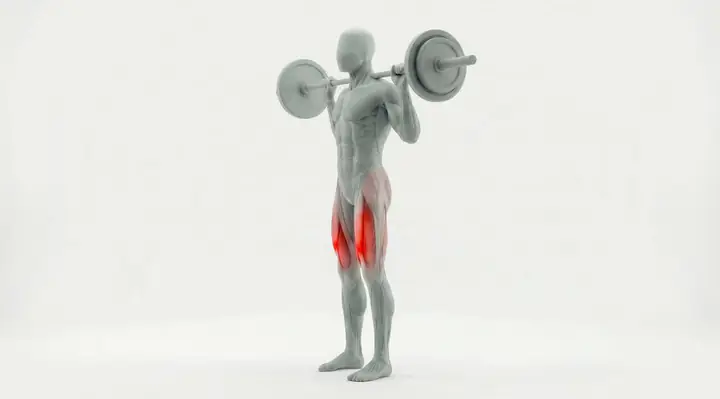 Intermediate Barbell Reverse Lunge
-
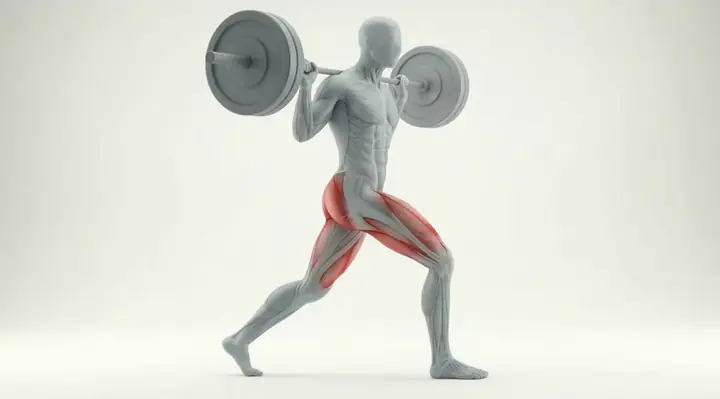 Intermediate Barbell Split Squat
-
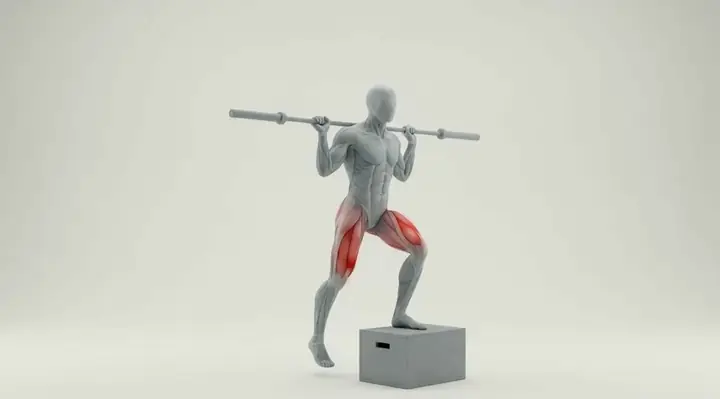 Intermediate Barbell Step Up Knee Drive
-
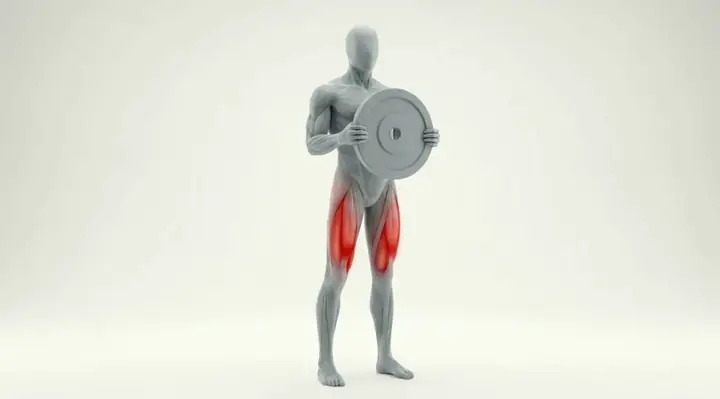 Beginner Plate Forward Lunge
-
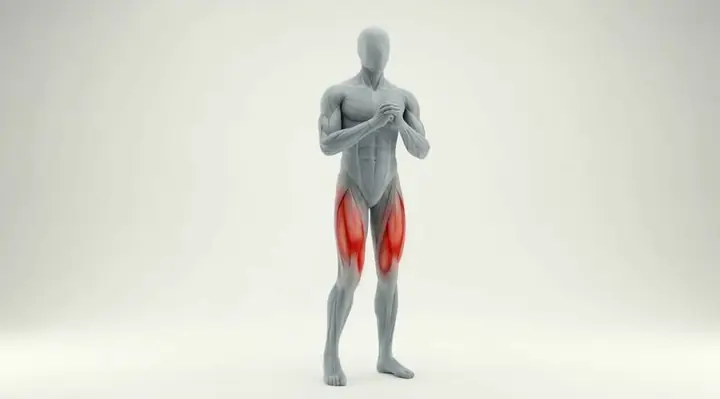 Intermediate Bodyweight Alternating Lateral Lunge
A week of training and meals built for you
Workoutify plans workouts around your days, time and equipment — and a menu for your goal and macros.