Dead Bug (Weighted)
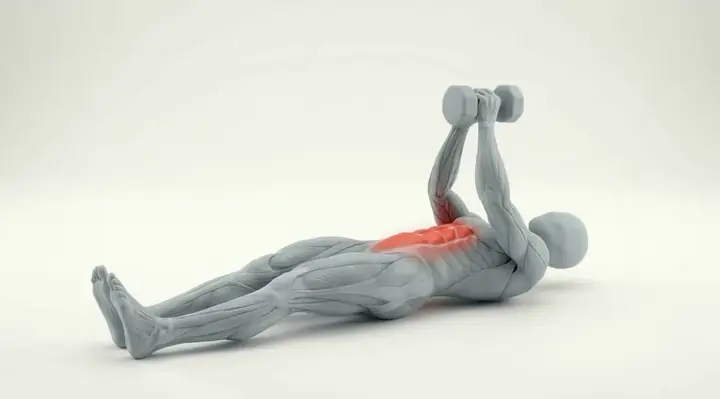
A loaded dead bug that holds two dumbbells overhead while opposite limbs extend with the low back pinned.
How to do it
- Lie on your back holding a light dumbbell in each hand, arms straight toward the ceiling.
- Lift both feet so the hips and knees are bent to 90 degrees and the shins are level.
- Press the lower back into the floor and brace the abdominals.
- Exhale and lower one dumbbell overhead while extending the opposite leg toward the floor.
- Stop just short of the floor while the lumbar spine stays flat, then return both limbs.
- Repeat on the other diagonal, keeping both feet off the ground between reps.
Key technique cue
Ribs down, lower back flat; don't set your feet down between reps.
Common mistakes
- ✕ Letting the lower back arch off the floor, which means the core has stopped resisting extension.
- ✕ Planting the feet, which turns a tabletop dead bug into a crook-lying sit-up setup.
- ✕ Reaching farther than you can hold position, which trades range for the stability being trained.
- ✕ Choosing dumbbells so heavy that the ribs flare before the first rep finishes.
Benefits
- ✓ Adds anti-extension load without taking the drill off the floor.
- ✓ The contralateral pattern still trains coordination while the weights raise the demand.
- ✓ Scales up from a bodyweight dead bug with the same lumbar cue.
Progression: from easier to harder
-
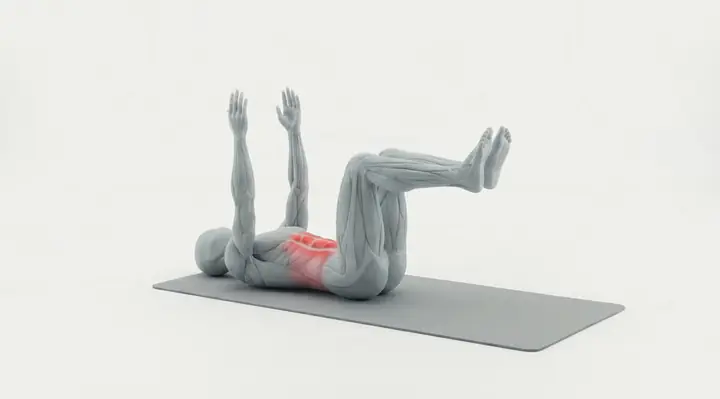 Step 1
-
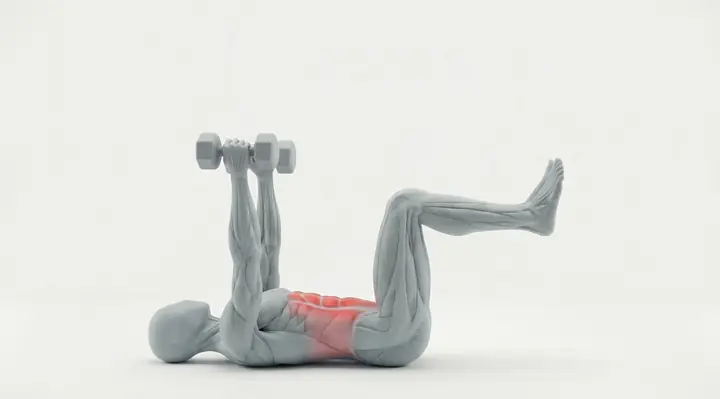 Step 2 You are here
- Dead Bug (Weighted)
About the exercise
The weighted dead bug keeps the same anti-extension job as the bodyweight version and adds load in the hands. You lie supine with both dumbbells stacked over the shoulders and both hips and knees at 90 degrees, feet in the air. One arm and the opposite leg travel away from center; the trunk's only job is to stop the lumbar spine peeling off the floor. The extra mass on the reaching arm raises the anti-extension demand without needing a cable.
Updated
Similar exercises
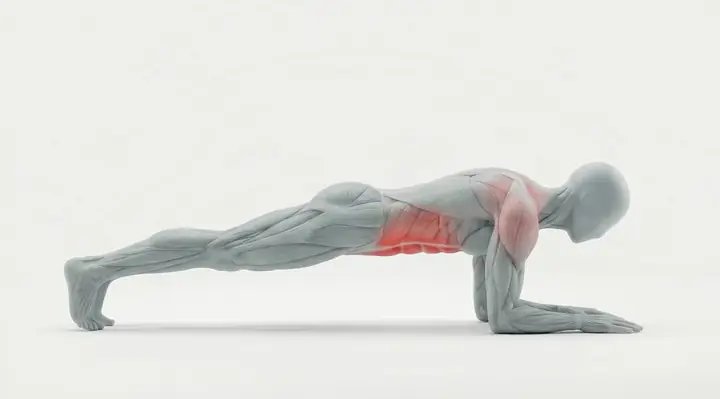
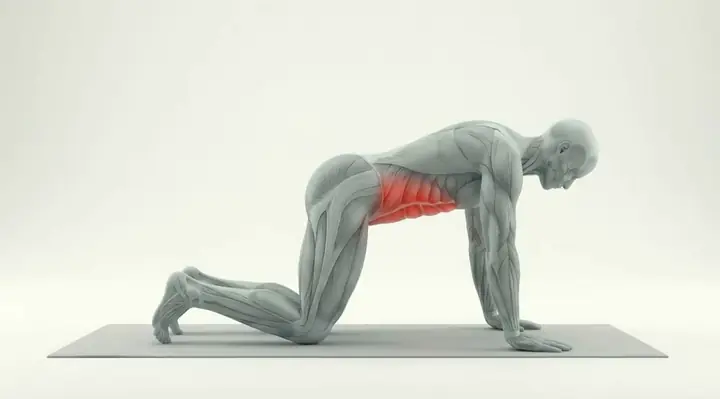
A week of training and meals built for you
Workoutify plans workouts around your days, time and equipment — and a menu for your goal and macros.