Dumbbell Suitcase Carry
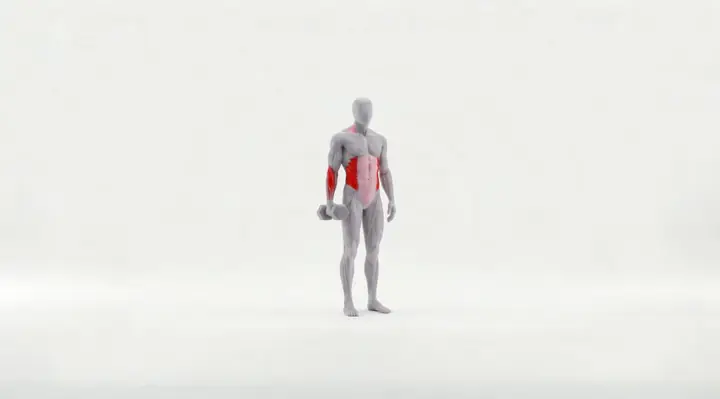
A one-sided loaded walk with a dumbbell hanging at the hip, training the trunk to resist side bending.
How to do it
- Pick up one heavy dumbbell in a firm grip and stand tall with the arm hanging at your side.
- Brace your abs so the shoulders and hips stay level.
- Keep the free arm relaxed and the eyes forward.
- Walk a set distance with even, controlled steps.
- Do not lean toward the weight or hike the loaded shoulder.
- Set the dumbbell down, switch hands, and walk back.
Key technique cue
Don't lean toward the weight — keep shoulders and hips level.
Common mistakes
- ✕ Leaning toward the loaded side instead of staying tall.
- ✕ Hiking the loaded shoulder toward the ear.
- ✕ Turning while still holding a heavy dumbbell, which twists the knees.
- ✕ Choosing a weight so light that the trunk never has to brace.
Benefits
- ✓ Trains the obliques to resist side bending under a real offset load.
- ✓ Builds grip and upper-trap endurance while you walk.
- ✓ Mirrors carrying a bag or suitcase, so it transfers to daily tasks.
Progression: from easier to harder
-
 Step 1 You are here
- Dumbbell Suitcase Carry
- Kettlebell Suitcase Carry
About the exercise
The suitcase carry is a walk with a heavy dumbbell in one hand. You stand tall, brace the abs, and take even steps without leaning toward or away from the weight. The offset load is the point: the obliques and quadratus lumborum have to stop the torso from collapsing, while the grip and upper traps hold the dumbbell still at the hip. It is the one-arm cousin of a farmer's carry, not a side bend.
Updated
Similar exercises

A week of training and meals built for you
Workoutify plans workouts around your days, time and equipment — and a menu for your goal and macros.