Running Cooldown
An easy jog after hard running, held at a conversational effort to bring heart rate and breathing back down.
How to do it
- Finish the hard effort and keep moving instead of stopping, dropping straight into an easy jog.
- Shorten your stride and let cadence settle to a rhythm you could hold in conversation.
- Keep the torso tall and the shoulders loose, with the arms swinging low and relaxed.
- Land under the hips with a quiet foot strike rather than reaching out in front.
- Hold the easy pace for several minutes until breathing and heart rate come down.
- Finish by walking for a minute or two before you stop moving entirely.
Key technique cue
Don't stop dead — jog, then walk, then stand.
Common mistakes
- ✕ Running the cool-down too fast, which keeps the session hard and defeats the purpose of the segment.
- ✕ Stopping abruptly after a hard effort, which leaves you standing still with blood pooled in the legs.
- ✕ Treating the cool-down as injury prevention, which the evidence does not support and can mask real issues.
- ✕ Cutting it to under a minute, which is too short for heart rate and breathing to actually settle.
Benefits
- ✓ Speeds the clearance of lactate from the blood compared with stopping and standing still.
- ✓ Provides a controlled transition out of hard work without adding meaningful training load.
- ✓ Gives a low-effort segment that can be repeated daily without interfering with adaptation.
Progression: from easier to harder
-
 Step 1 You are here
- Running Cooldown
-
 Step 2
-
 Step 3
-
 Step 4
About the exercise
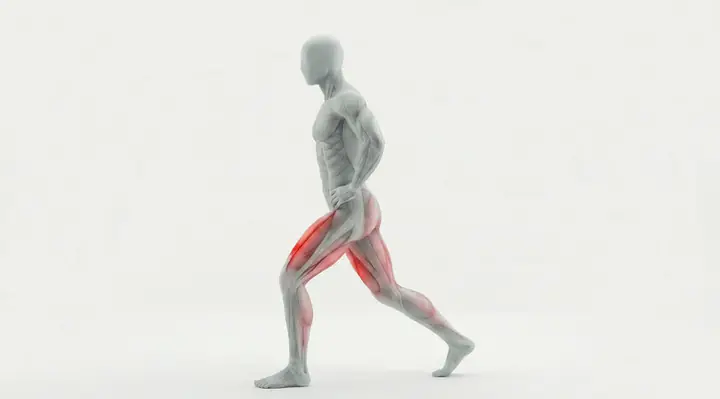
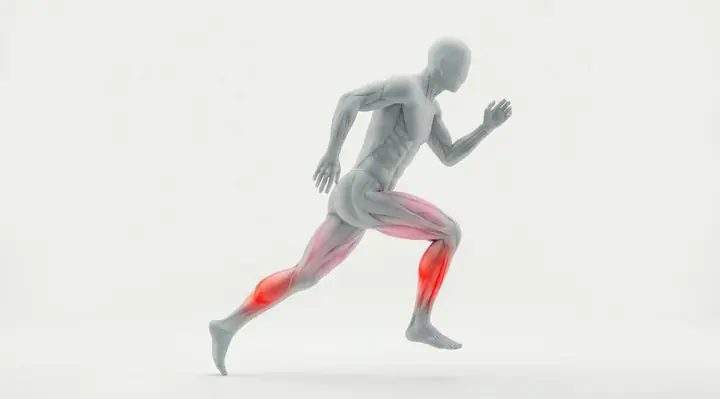
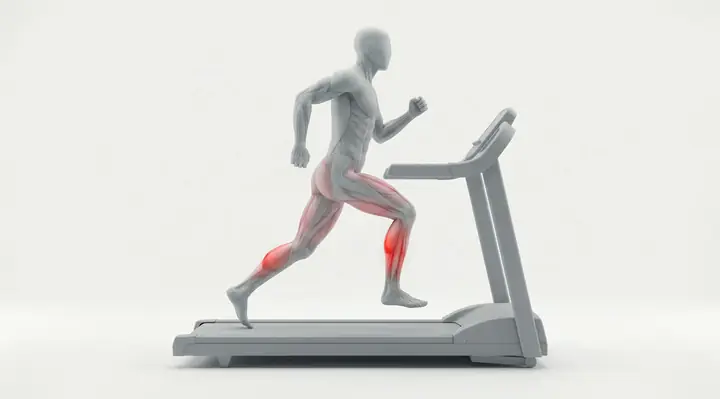
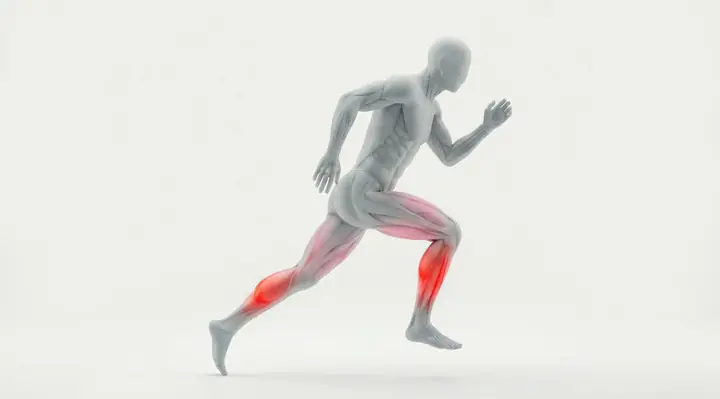
A running cool-down is the same gait pattern at much lower intensity. Stride shortens and ground contact softens, but the working muscles are unchanged: the vastus group at the knee, the gluteal muscles and iliopsoas at the hip, and soleus and gastrocnemius at the ankle. The evidence is narrower than the habit suggests. A narrative review found that active cool-downs speed the fall of blood lactate but not muscle lactate, do not reliably improve next-day performance, and do not prevent injuries, while also not blunting long-term adaptation. It is a sensible transition, not a recovery intervention.
Updated
A week of training and meals built for you
Workoutify plans workouts around your days, time and equipment — and a menu for your goal and macros.