Alternate Hammer Curl
A standing dumbbell curl done one arm at a time with a neutral grip, loading the biceps, brachialis, and forearms.
How to do it
- Stand tall with a dumbbell in each hand, arms hanging, palms facing your thighs.
- Set a slight bend in both elbows so the biceps stay under tension at the bottom.
- Keep the torso still and pin both elbows to your sides.
- Curl one dumbbell toward the shoulder, keeping the palm facing in the whole way.
- Squeeze at the top, then lower that dumbbell until the arm is almost straight.
- Curl the other arm the same way and keep alternating for the set.
Key technique cue
Elbows at the sides, palms in; no swinging, each arm does its own rep.
Common mistakes
- ✕ Swinging the torso or the dumbbell to finish the rep.
- ✕ Letting the elbows drift forward, which turns the curl into a front raise.
- ✕ Cutting the lowering phase short instead of reaching near-full elbow extension.
- ✕ Rushing the switch so neither arm gets a controlled, independent rep.
Benefits
- ✓ Loads the biceps, brachialis, and brachioradialis in one neutral-grip pattern.
- ✓ Alternating arms makes it easier to keep each side strict and even.
- ✓ The hammer grip is often friendlier on the wrists than a fully supinated curl.
Progression: from easier to harder
-
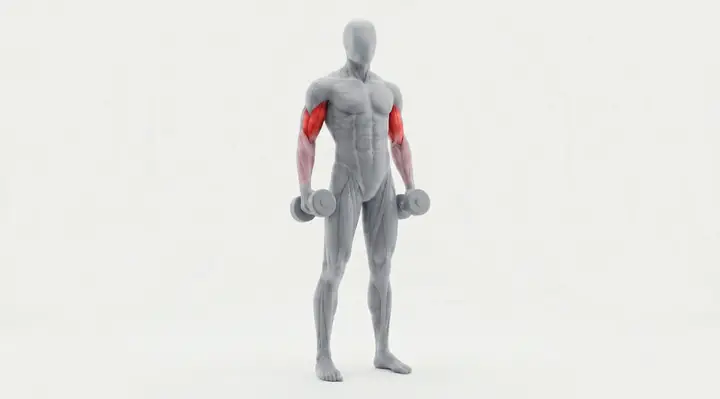 Step 1 You are here
-
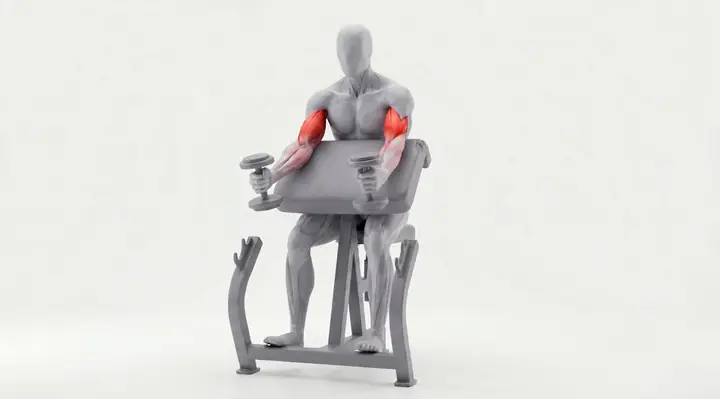 Step 2
About the exercise
The alternate hammer curl keeps a dumbbell in each hand with the palms facing in, then curls one arm at a time while the other hangs. That neutral grip splits the work between the biceps, the brachialis underneath it, and the brachioradialis along the forearm, which is why the lower arm fatigues faster here than in a palms-up curl. Elbows stay pinned to the sides so the shoulders cannot swing the weight.
Updated
Similar exercises
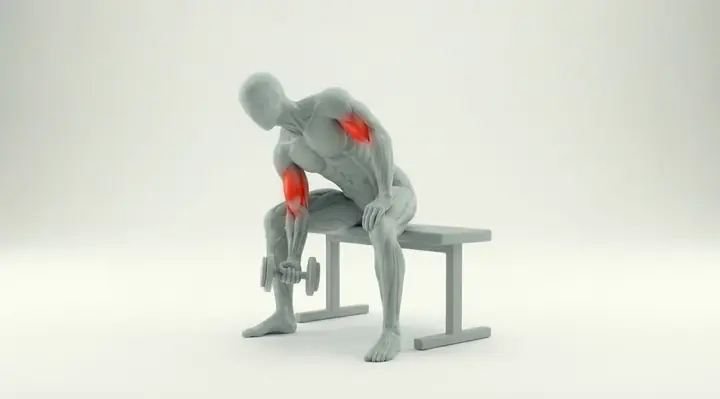
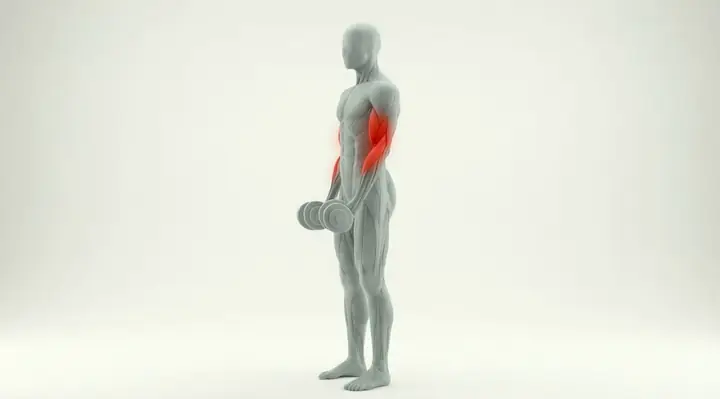
A week of training and meals built for you
Workoutify plans workouts around your days, time and equipment — and a menu for your goal and macros.