Seated Dumbbell Curl
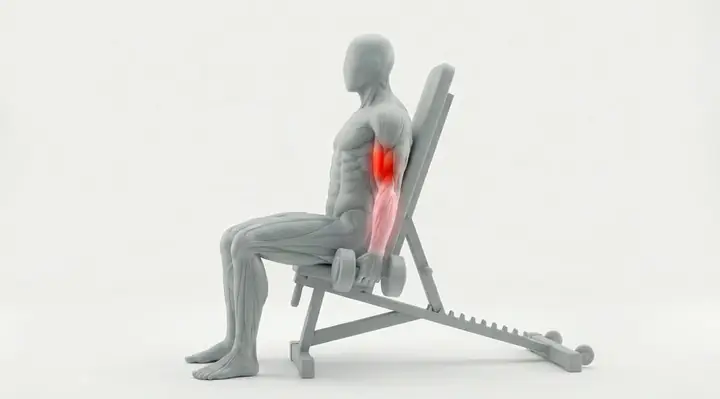
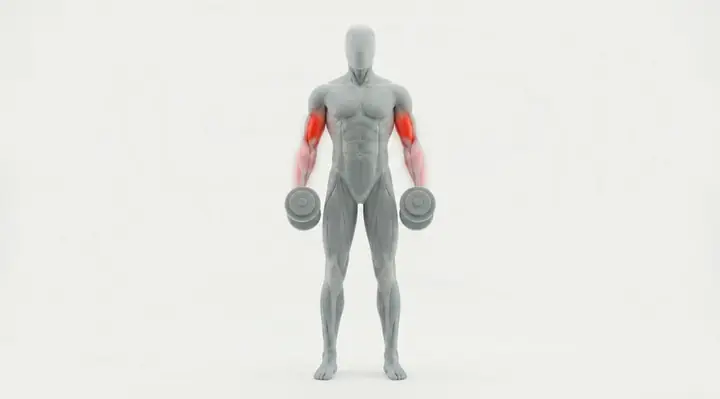
A seated dumbbell curl with the back supported, removing the swing so the biceps work through a strict range.
How to do it
- Set an adjustable bench upright and sit with your back flat against the pad.
- Plant your feet on the floor about hip-width apart with your knees bent.
- Hold a dumbbell in each hand with your arms hanging and palms facing forward.
- Curl both dumbbells toward your shoulders, moving only at the elbows.
- Squeeze the biceps at the top without letting your shoulders shrug.
- Lower the dumbbells slowly to full extension and repeat.
Key technique cue
Back flat on the backrest — don't rock to lift the weight.
Common mistakes
- ✕ Peeling the back off the pad to start the rep, which reintroduces the swing the seat removes.
- ✕ Letting the elbows drift back behind the torso, which shortens the range at the bottom.
- ✕ Dropping the weights quickly, which throws away half of every rep.
- ✕ Shrugging at the top, which passes work to the traps instead of the biceps.
Benefits
- ✓ The supported back makes cheating obvious, so the biceps take the load.
- ✓ Each arm works independently, which exposes side-to-side differences.
- ✓ Needs only a bench and a pair of dumbbells, so it fits minimal home setups.
Progression: from easier to harder
-
 Step 1 You are here
- Step 2
About the exercise
The seated dumbbell curl is the strict version of the standard curl. Sitting with your back flat against a near-vertical bench pad removes the hip drive and torso lean that creep into standing curls, so the only thing that can move the weight is elbow flexion. Both dumbbells hang at your sides with the palms forward, and the upper arms stay pinned while the weights travel up. Letting the elbows drift forward at the top brings in the front of the shoulder, which is a variation rather than an error; the strict version keeps them fixed.
Updated
Similar exercises
A week of training and meals built for you
Workoutify plans workouts around your days, time and equipment — and a menu for your goal and macros.