Barbell Rack Pull
A partial deadlift from raised pins — heavy loading for the back without the demands of a full pull from the floor.
How to do it
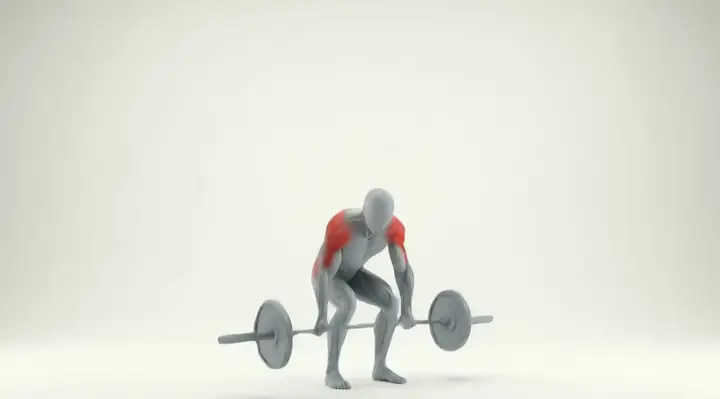
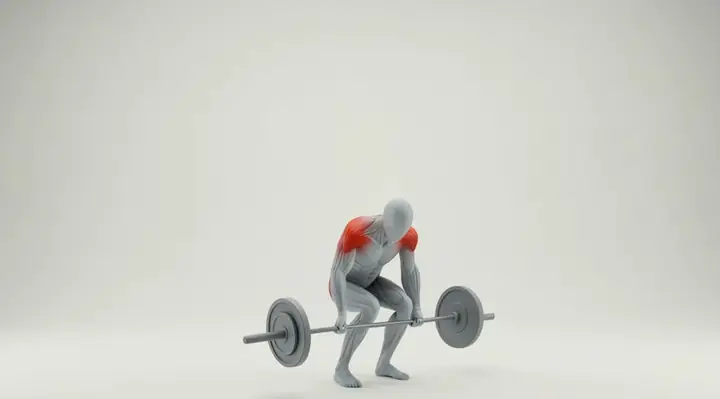
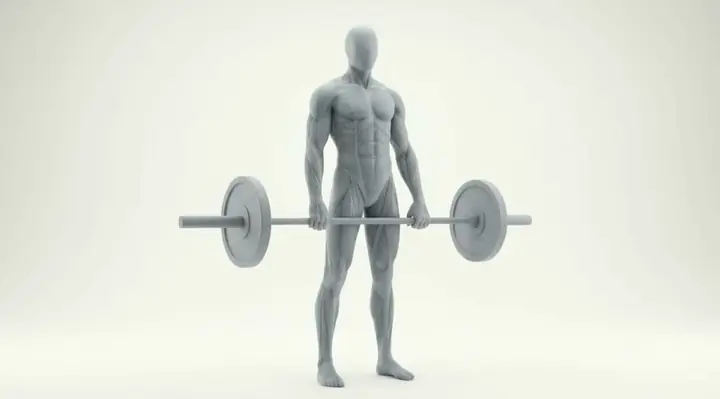
- Set the safety pins in the rack at about knee height and load the bar with your working weight.
- Stand with your feet hip-width apart, the bar over midfoot, and a grip just outside your knees.
- Take the slack out of the bar, brace your core, and lift your chest high with a flat back.
- Drive your feet through the floor, keeping the bar close to your thighs.
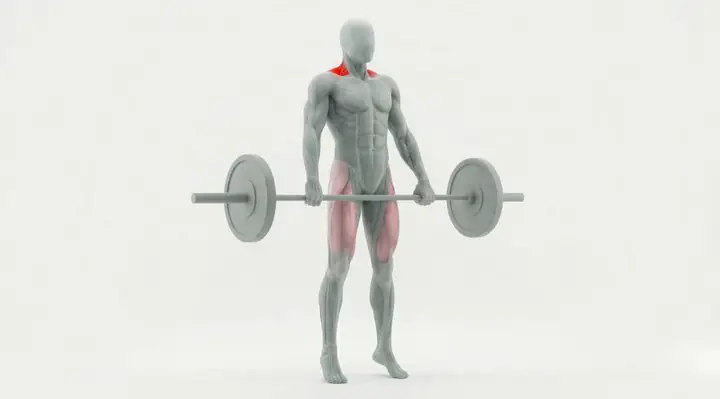
- Stand all the way up, squeezing your glutes as your hips and knees extend together.
- Lower the bar back to the pins under control, reset your breath, and repeat cleanly.
Key technique cue
Keep the bar at the thighs, chest up — finish by squeezing the glutes, no leaning back.
Common mistakes
- ✕ Setting the pins too low or too high, which removes the benefit of the partial lift and risks a technique breakdown.
- ✕ Rounding the upper back hard to grind out a rep, which loads the spine under heavy weight.
- ✕ Hyperextending at the top instead of finishing with a hard glute squeeze and a stacked ribcage.
- ✕ Bouncing the bar off the pins and using momentum instead of resetting between reps.
Benefits
- ✓ Builds upper-back and trap thickness with heavier loads than a full deadlift.
- ✓ Strengthens the deadlift lockout for stronger pulls overall.
- ✓ Teaches the hinge pattern through a shorter, easier range of motion.
Progression: from easier to harder
-
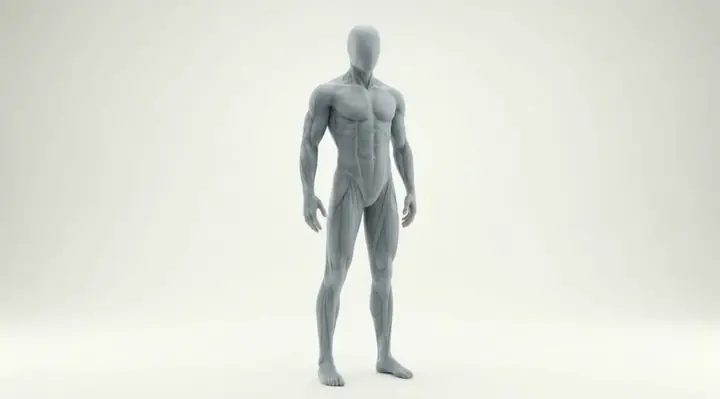 Step 1
-
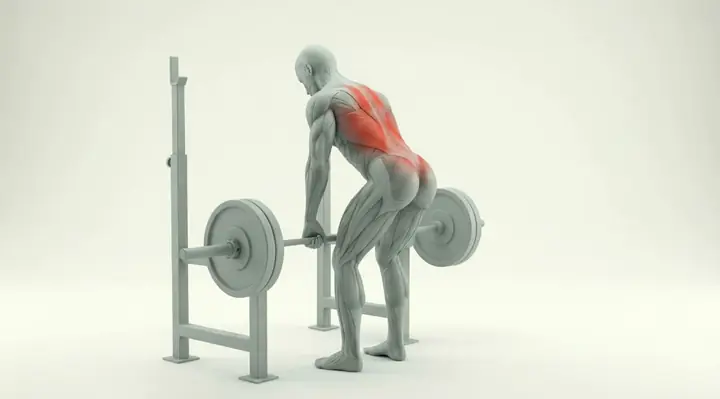 Step 2 You are here
- Barbell Rack Pull
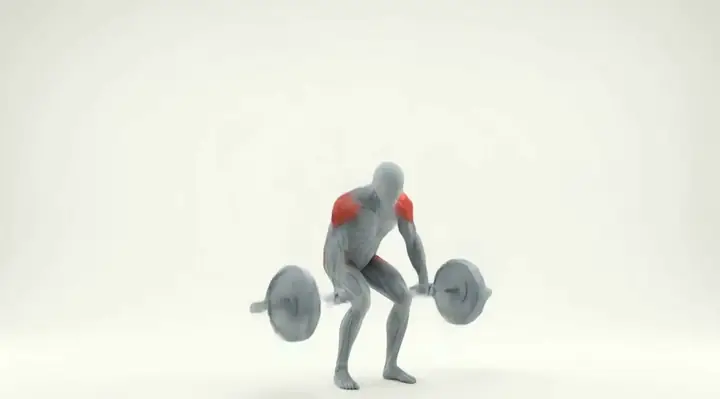
- Dumbbell Deadlift
-
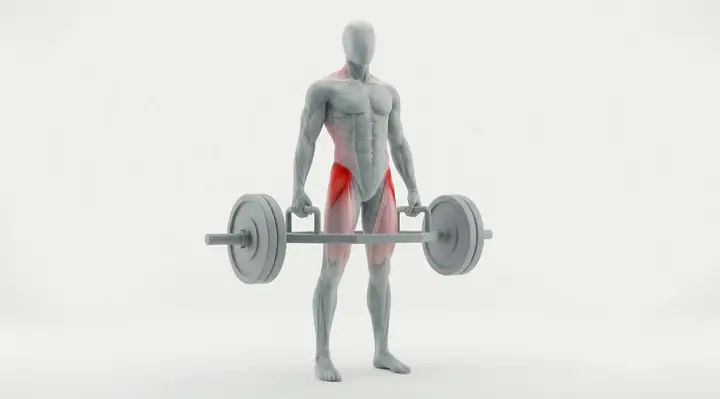 Step 3
-
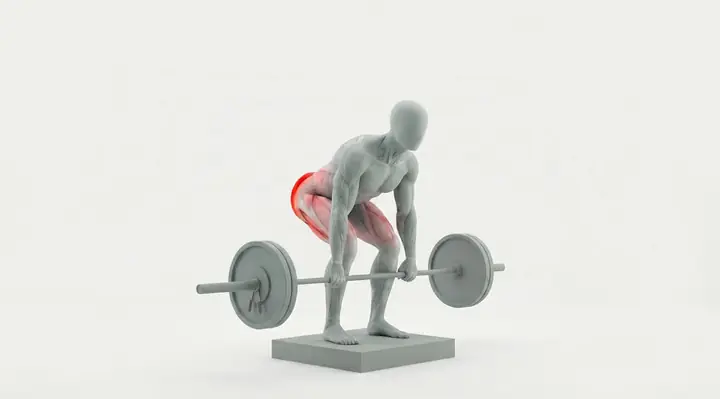 Step 4
About the exercise
The Barbell Rack Pull is a partial deadlift performed from pins set at about knee height. Starting from a higher position lets the athlete load more weight than in a full deadlift and focus the tension on the upper back, traps, and lockout strength. It's a favorite accessory for building mid-back thickness and breaking through deadlift sticking points. The shorter range and more forgiving setup make it a great way for beginners to learn the hinge pattern before moving on to the full deadlift. It's also used as an accessory on pull days and in powerlifting programs targeting the deadlift lockout.
Updated
Similar exercises
A week of training and meals built for you
Workoutify plans workouts around your days, time and equipment — and a menu for your goal and macros.