Chest-Supported Dumbbell Row
A prone incline dumbbell row that removes the hinge so the mid back and lats work without lower back load.
How to do it
- Set an adjustable bench to roughly 45 degrees and pick up two dumbbells.
- Lie face down on the pad with your chest supported and your arms hanging.
- Hold the dumbbells with palms facing each other and neutral wrists.
- Retract your shoulder blades and pull your elbows behind your body.
- Stop when your elbows reach or just pass the line of your torso.
- Lower the dumbbells slowly to full arm extension and repeat.
Key technique cue
Chest stays on the pad, pull with the elbows, don't shrug.
Common mistakes
- ✕ Peeling the chest off the pad to add range, which reintroduces the back extension you removed.
- ✕ Swinging the dumbbells up, so the pull comes from momentum rather than muscle.
- ✕ Shrugging the shoulders toward the ears instead of retracting the blades.
- ✕ Squeezing the handles hard with a full grip, which lets the biceps take over the pull.
Benefits
- ✓ Rows heavy loads without stressing the lower back.
- ✓ Chest support removes momentum so each rep stays strict.
- ✓ Neutral grip is comfortable for shoulders and wrists.
Progression: from easier to harder
-
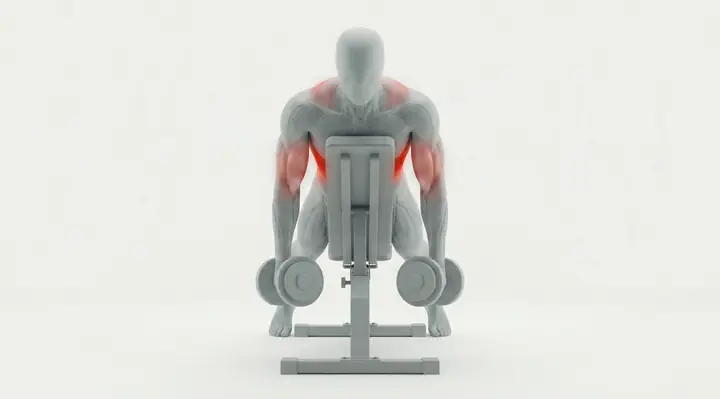 Step 1 You are here
-
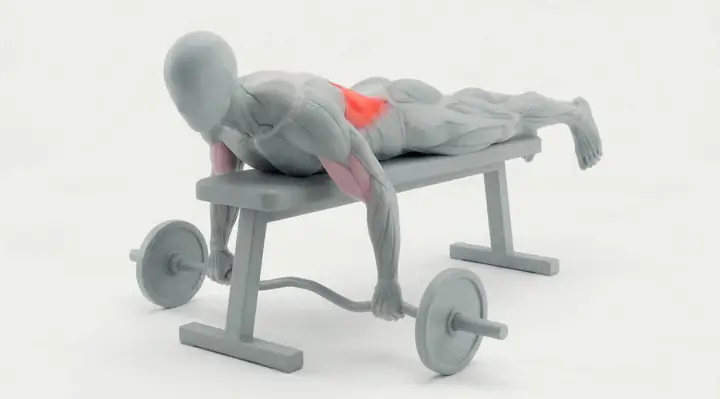 Step 2
About the exercise
Lying face down on a bench set near 45 degrees takes the hip hinge and the spinal bracing out of a dumbbell row. From a neutral grip with the dumbbells hanging, you retract the shoulder blades and drive the elbows behind the torso until they reach or just pass the midline. Because the chest is fixed against the pad, momentum is hard to generate, so the mid trapezius, rhomboids and lats absorb the load while the biceps and rear delts assist. It is useful anywhere lower back load is a constraint: rehab-adjacent programs, high-volume hypertrophy blocks, and beginner training where a free bent over row is still too demanding.
Updated
Similar exercises
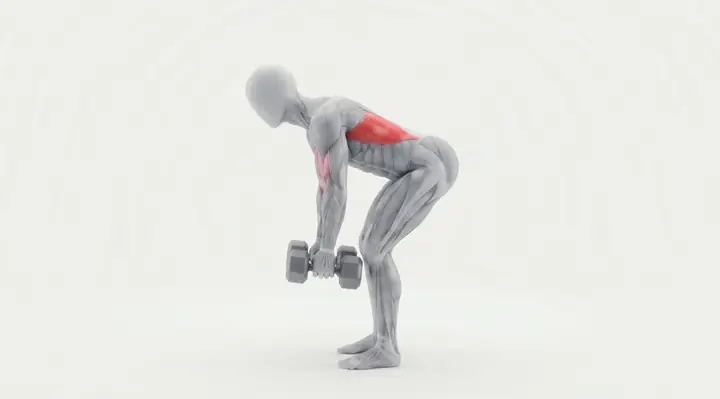
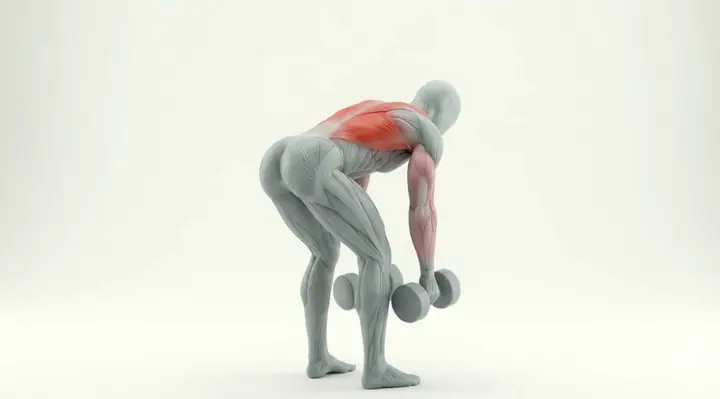
A week of training and meals built for you
Workoutify plans workouts around your days, time and equipment — and a menu for your goal and macros.