Crunches
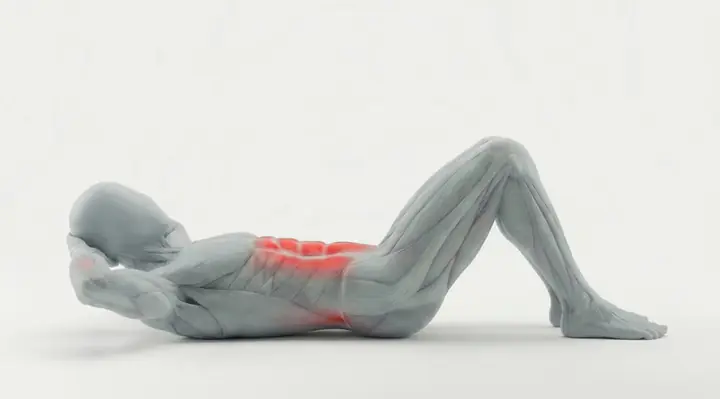
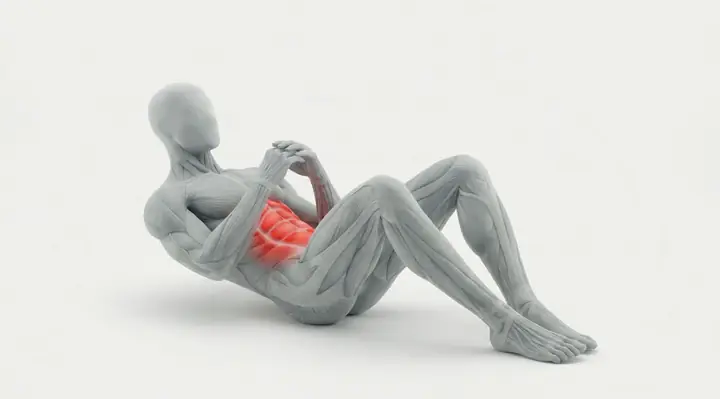
A short-range supine trunk curl that lifts the shoulder blades while the lower back stays on the floor.
How to do it
- Lie on your back with your knees bent and your feet flat, heels about a foot from your hips.
- Place your hands behind your head with the elbows open, or cross the arms on the chest.
- Press the lower back gently into the floor and brace the abdominals.
- Exhale and curl the rib cage toward the pelvis until the shoulder blades lift off the mat.
- Pause with the lumbar spine still in contact with the floor.
- Inhale and lower under control without dropping the head between reps.
Key technique cue
Lower back on the floor, don't pull the head — lift only the shoulder blades.
Common mistakes
- ✕ Yanking on the head with the hands, which strains the neck and fakes trunk range.
- ✕ Curling all the way to a sit-up, which hands the work to the hip flexors.
- ✕ Lifting the lower back off the floor, which turns a short curl into a swing.
- ✕ Racing the reps so the abdominals never stay shortened at the top.
Benefits
- ✓ Isolates the abdominals through a short range with the lumbar spine supported.
- ✓ Needs no equipment, so it fits any room, travel context, or beginner block.
- ✓ Serves as the reference trunk-flexion exercise that decline and weighted variants are compared against.
Progression: from easier to harder
-
 Step 1 You are here
- Crunches
-
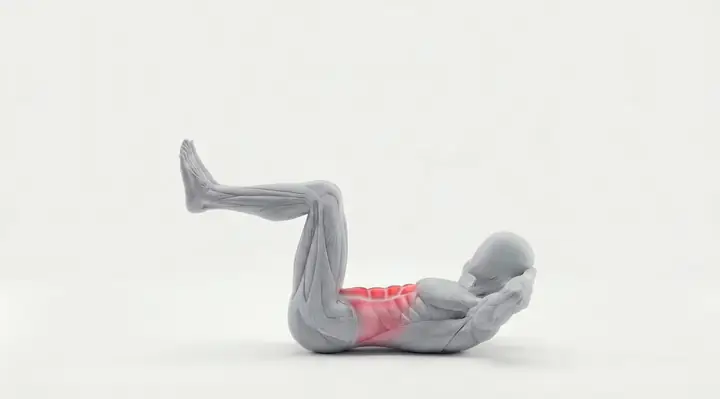 Step 2
-
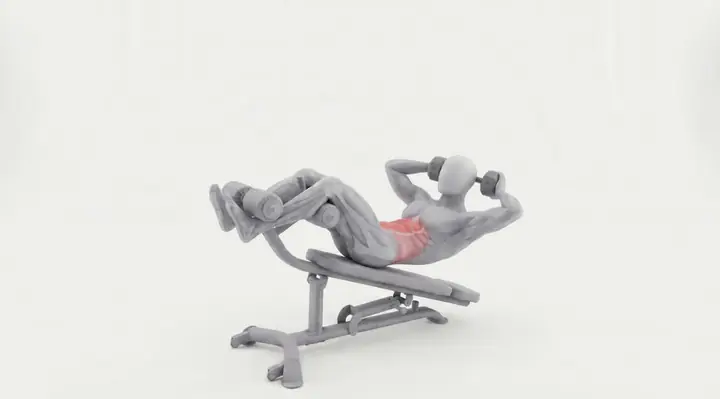 Step 3
About the exercise
The crunch is trunk flexion done lying face up with the knees bent and the feet flat. Only the shoulder blades and upper back leave the mat; the tailbone and lumbar spine stay down, which keeps the work in the abdominals instead of handing it to the hip flexors. That short range is the point of the exercise. EMG work used the traditional crunch as the reference against which other ab moves were compared, and none of the gadgets beat it for rectus abdominis activity.
Updated
Similar exercises
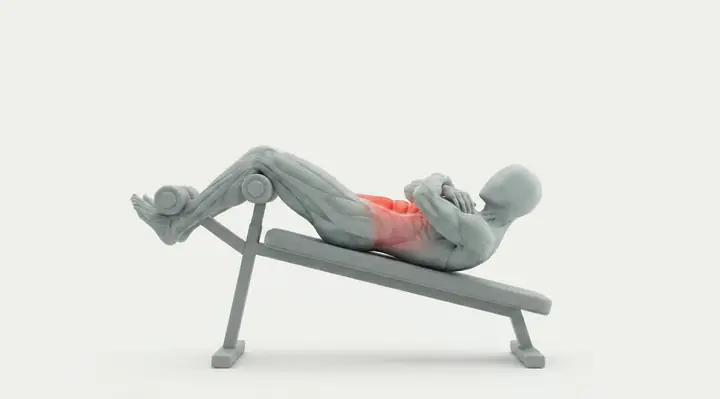
A week of training and meals built for you
Workoutify plans workouts around your days, time and equipment — and a menu for your goal and macros.