Decline Machine Chest Press
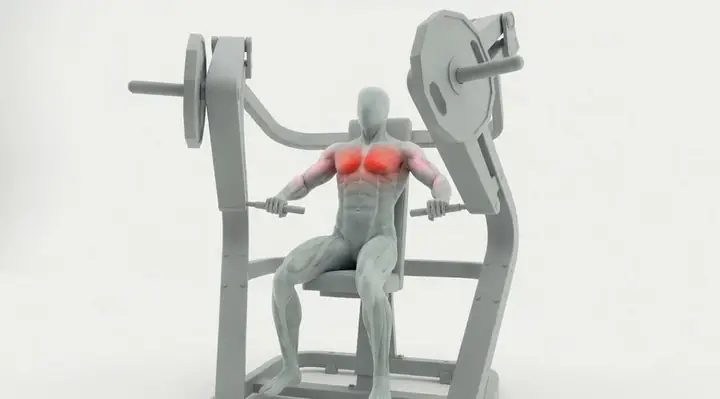
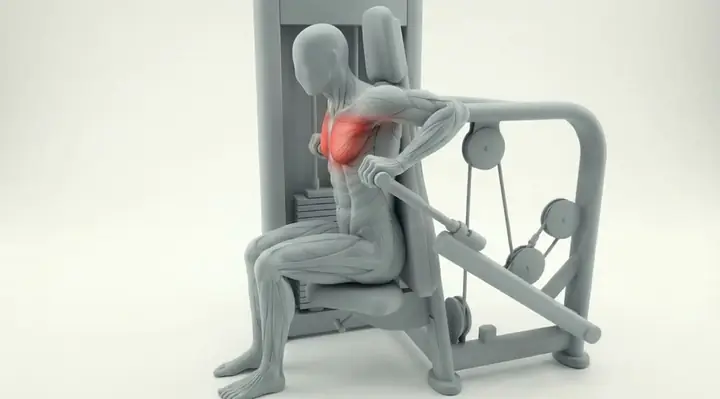
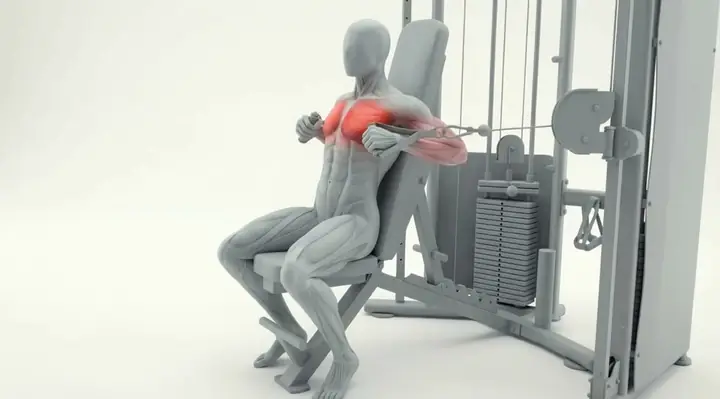
Seated machine press on a downward path that loads the lower chest without a decline bench or a spotter.
How to do it
- Set the seat height so the handles line up with your lower chest and load the machine.
- Sit back with your whole spine against the pad and fasten the seat belt if the machine has one.
- Take a handle in each hand with an overhand grip and set your shoulder blades back and down.
- Press the handles down and away from your chest until your elbows are almost straight.
- Stop just short of locking out and hold the chest contraction briefly.
- Return the handles slowly until you feel a stretch across the chest, then repeat.
Key technique cue
Keep the seat low enough — press down and away, shoulder blades back and down, no hard lockout.
Common mistakes
- ✕ Setting the seat too high turns the movement into a flat or incline press and removes the downward angle.
- ✕ Letting the shoulders roll forward off the pad at the finish transfers load onto the shoulder joint.
- ✕ Slamming into full lockout hands the work to the joints and drops tension off the chest.
- ✕ Letting the stack pull the handles back quickly wastes the eccentric and risks a jolt at the shoulder.
Benefits
- ✓ Delivers a decline pressing angle without an inverted setup or a spotter.
- ✓ Fixed path lets a beginner load the chest heavily with minimal balance demand.
- ✓ Independent handles on iso-lateral machines let each side work through its own range.
Progression: from easier to harder
-
 Step 1 You are here
- Decline Machine Chest Press
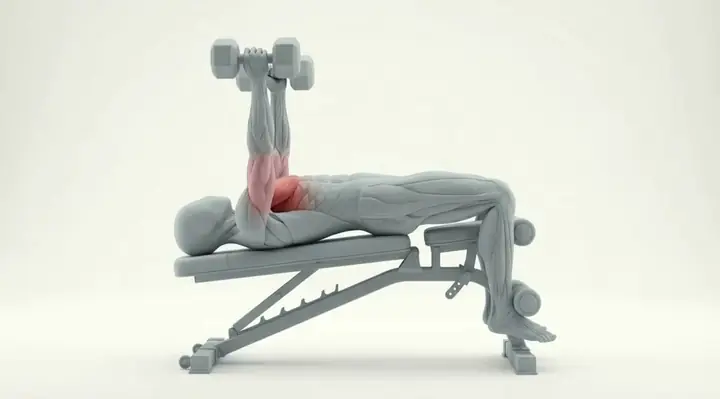
- Cable Decline Bench Press
- Smith Machine Decline Bench Press
-
 Step 2
About the exercise
The decline machine chest press reproduces a decline pressing angle while the lifter stays upright in a seat. The handles travel down and forward on a fixed path, so the pectoralis major does the pressing with the triceps extending the elbows and the front deltoid assisting. Manufacturer specifications place the primary target on the lower pectoralis major, with the triceps and anterior deltoids engaged in support. The guided arc is the point. There is no bar to balance and no lift-off, so a novice can load the lower chest without a training partner.
Updated
Similar exercises
A week of training and meals built for you
Workoutify plans workouts around your days, time and equipment — and a menu for your goal and macros.