Smith Machine Bench Press
Flat bench press performed inside a Smith machine, where the bar runs on a fixed vertical track.
How to do it
- Position a flat bench under the Smith machine bar and load the desired weight.
- Lie back so the bar tracks over your mid-chest and plant your feet on the floor.
- Grip the bar wider than shoulder width and set your shoulder blades into the bench.
- Rotate and lift the bar to disengage it from the safety hooks.
- Lower the bar under control until it sits about an inch above your chest, then pause.
- Press it back up without locking the elbows hard, and repeat for the prescribed reps.
Key technique cue
Grip wider than the shoulders, bar to mid-chest — rotate the bar back onto the hooks.
Common mistakes
- ✕ Using a narrow grip on the fixed track shifts the load onto the front deltoids instead of the chest.
- ✕ Lying too far up or down the bench forces the fixed bar path to a point your shoulders cannot press safely.
- ✕ Bouncing the bar off the chest replaces controlled work with momentum and jars the shoulder joint.
- ✕ Forgetting to rotate the bar back into the hooks before sitting up leaves the load unsupported.
Benefits
- ✓ Fixed bar path lets a lifter train chest pressing close to failure without a spotter.
- ✓ Built-in hooks give a bail-out point at almost any height in the range.
- ✓ Removes most of the balance demand, so attention goes to bar position and tempo.
Progression: from easier to harder
-
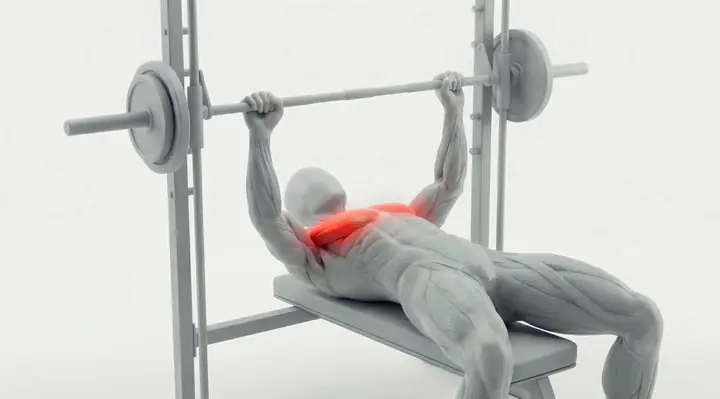 Step 1 You are here
- Smith Machine Bench Press
- Cable Bench Press
- Cable Chest Press
- Floor Press
- Machine Chest Press
- Barbell Floor Press
-
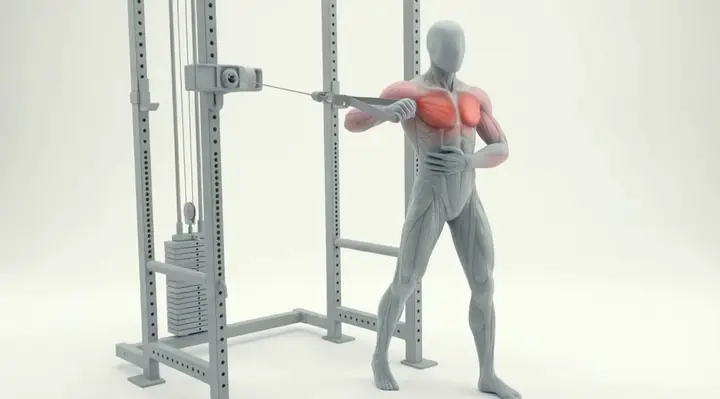 Step 2
-
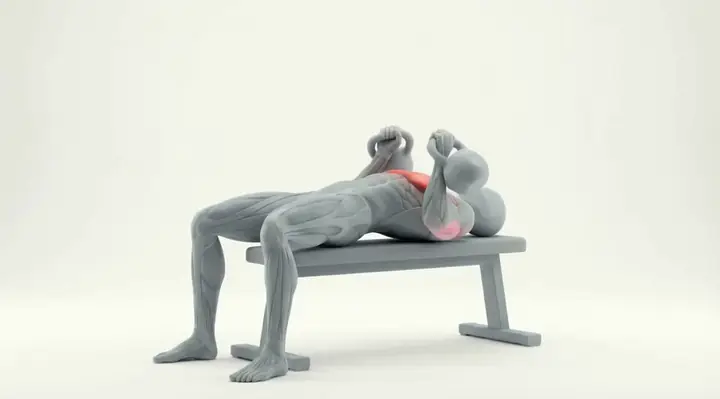 Step 3
About the exercise
The Smith machine bench press keeps the bar on guided rails, so the lifter presses a fixed path instead of stabilizing a free bar. The pectoralis major remains the prime mover with the triceps and front deltoid assisting. Direct comparison shows the trade-off: pectoral and anterior deltoid activation were comparable to a free weight bench press, but the medial deltoid worked harder on free weights. A grip wider than shoulder width keeps emphasis on the chest instead of the front of the shoulder, and the bar should stop just above the chest rather than resting on it. It is a guided-bar chest press that suits training alone without a spotter.
Updated
Similar exercises
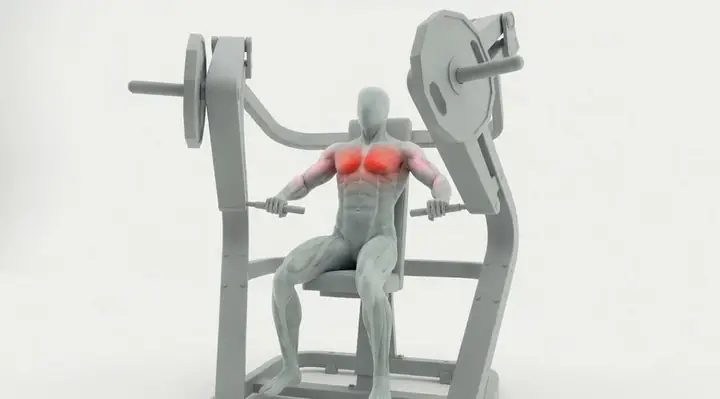
A week of training and meals built for you
Workoutify plans workouts around your days, time and equipment — and a menu for your goal and macros.