Barbell Floor Press
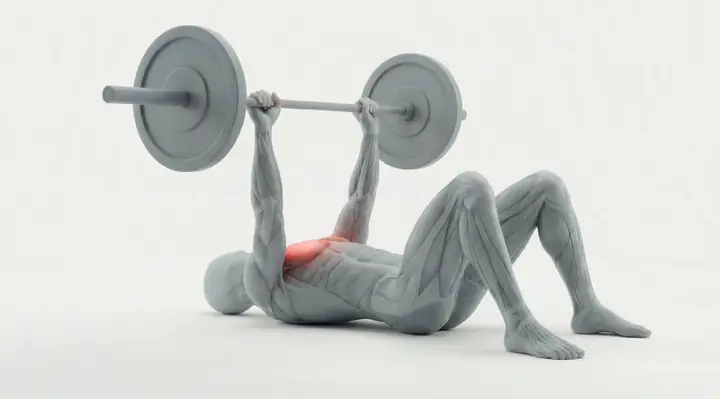
A supine barbell press from the floor that stops the elbows at ground level, cutting range and loading the lockout.
How to do it
- Load a barbell and lie back on the floor with the bar over your chest, or have a partner pass it to you.
- Bend your knees and plant your feet, keeping head, shoulders and hips in contact with the floor.
- Grip the bar slightly wider than shoulder width and pull your shoulder blades down and together.
- Lower the bar under control until the back of your upper arms just touches the floor.
- Pause for a beat without relaxing, then press the bar back up over your chest.
- Stop just short of locking the elbows and repeat for the prescribed reps.
Key technique cue
Touch the floor with the back of the arms, pause, then press — no bouncing.
Common mistakes
- ✕ Bouncing the elbows off the floor, which loses tension and sends a shock load through the elbow joint.
- ✕ Flaring the elbows out to ninety degrees, which stresses the shoulder without adding chest work.
- ✕ Driving with the legs as if bench pressing, which lifts the hips and shortens the intended range.
- ✕ Locking out hard on every rep, which hands the work to the joints instead of the triceps and chest.
Benefits
- ✓ Loads the top half of the press heavily, which carries over to bench press lockout strength.
- ✓ Limits shoulder extension, so it suits lifters who find deep bench pressing uncomfortable.
- ✓ Needs only a bar and floor space, which makes it viable in gyms without a bench.
Progression: from easier to harder
-
 Step 1 You are here
- Barbell Floor Press
- Cable Bench Press
- Cable Chest Press
- Floor Press
- Machine Chest Press
- Smith Machine Bench Press
-
 Step 2
-
 Step 3
About the exercise
The barbell floor press is a horizontal press performed lying on the floor rather than a bench. The ground stops the upper arms partway down, which removes the deepest part of the range and takes the stretch off the shoulder. Less range means the triceps carry a larger share of the work and heavier loads can be handled than in a full bench press. Leg drive is unavailable because the hips stay flat, so the chest, front deltoids and triceps produce the lift on their own. It is a pressing variation used in powerlifting accessory work, shoulder friendly programming and minimal-equipment gym plans.
Updated
Similar exercises
A week of training and meals built for you
Workoutify plans workouts around your days, time and equipment — and a menu for your goal and macros.