Bodyweight Good Morning
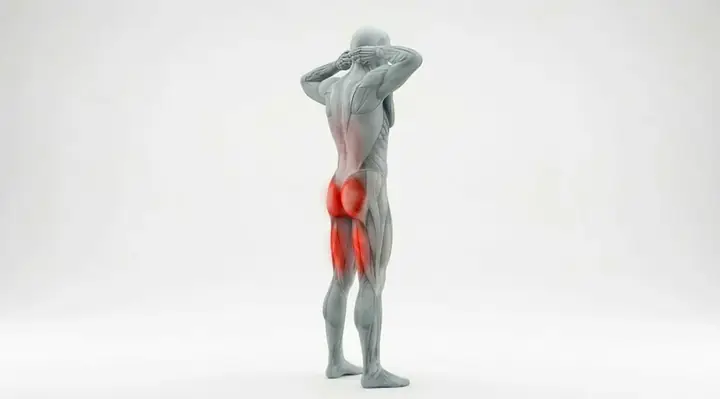
A standing hip hinge that trains the hamstrings, glutes and lower back — clean teaching material for the hinge pattern.
How to do it
- Stand tall with your feet hip-width apart and your arms crossed over your chest or behind your head.
- Brace your core and put a soft bend in your knees, keeping that bend the same throughout the rep.
- Push your hips back and tip your torso forward, keeping your back flat from head to tailbone.
- Lower until you feel a deep stretch in your hamstrings or your torso is roughly parallel to the floor.
- Drive your hips forward to bring your torso back up to standing, squeezing your glutes at the top.
- Pause briefly standing before starting the next rep, keeping the same knee angle throughout the set.
Key technique cue
Hips back, knees soft, back flat; go no lower than your back allows.
Common mistakes
- ✕ Rounding the back as you tip forward, which loads the spine instead of the hamstrings and glutes.
- ✕ Bending the knees more on the way down, which turns the hinge into a half squat and reduces hamstring work.
- ✕ Going below parallel before the hips can absorb the stretch, which overloads the lower back.
- ✕ Coming up by pulling with the lower back instead of driving with the hips and glutes.
Benefits
- ✓ Builds hamstring strength through a controlled stretch.
- ✓ Strengthens the glutes and lower back as a connected hinge unit.
- ✓ Teaches the hip hinge pattern used in every deadlift variation.
Progression: from easier to harder
-
 Step 1 You are here
- Bodyweight Good Morning
-
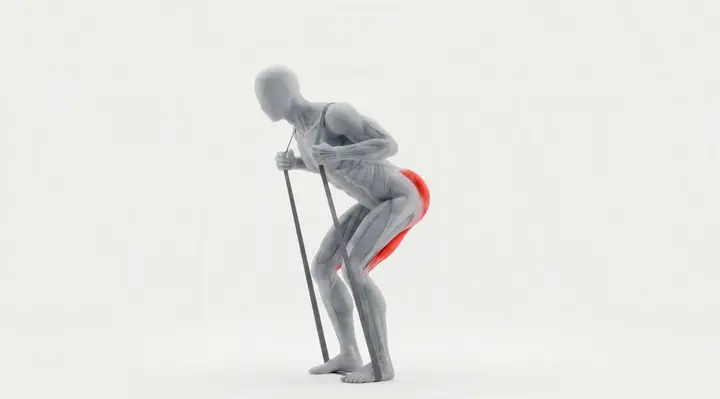 Step 2
- Step 3
About the exercise
The Good Morning is a hip hinge exercise in which the torso tips forward over braced legs. With a minimal knee bend, the hamstrings stretch while the lower back stays rigid as the hips push back, then drive forward to stand up again. It is the cleanest way to teach the hinge pattern that underpins deadlifts, kettlebell swings and Romanian deadlifts. The good morning is a foundational exercise for learning the hinge. It shows up in mobility warm-ups, posterior-chain accessory blocks and lower-back resilience programs. Start with it as an entry-level hinge, then progress to loaded variations like the barbell good morning or the Romanian deadlift. It is a key building block for any program that takes hinge mechanics seriously.
Updated
Similar exercises
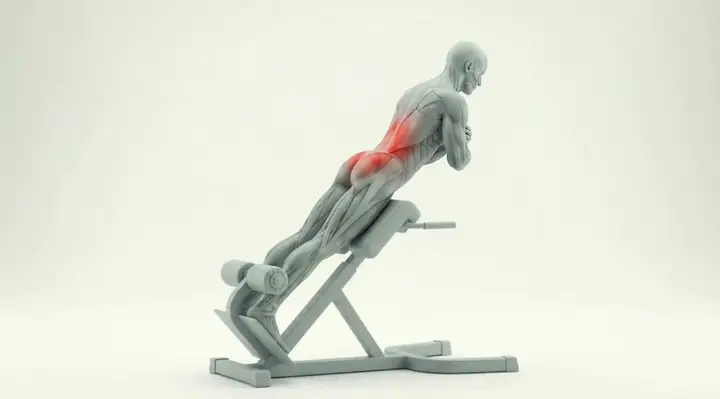
A week of training and meals built for you
Workoutify plans workouts around your days, time and equipment — and a menu for your goal and macros.