Single-Leg Bound
Repeated forward bounds on the same foot, with a clear flight phase and a controlled same-foot landing.
How to do it
- Stand tall on one foot with the other foot lifted and the arms in a running carriage.
- Load a small dip on the planted leg without sitting into a deep squat.
- Drive that foot into the floor and bound forward, keeping the free foot off the ground.
- Land on the same foot on the ball of the foot, then bound again immediately.
- Keep the torso upright and the flight phase visible; do not shuffle.
- Continue for the desired contacts, then switch stance legs.
Key technique cue
Don't touch down with the free foot; stay airborne and land quietly on a bent knee.
Common mistakes
- ✕ Landing stiff-legged with almost no knee bend.
- ✕ Letting the free foot tap down so the drill becomes a run.
- ✕ Sitting too deep on each load, which kills the spring.
- ✕ Bounding so far that the landing cannot be stacked and quiet.
Benefits
- ✓ Trains same-foot elastic power that a two-foot jump does not.
- ✓ Shows left-to-right hop gaps that alternating bounds can hide.
- ✓ Needs no kit, so it fits field, court, and studio plyometric blocks.
Progression: from easier to harder
-
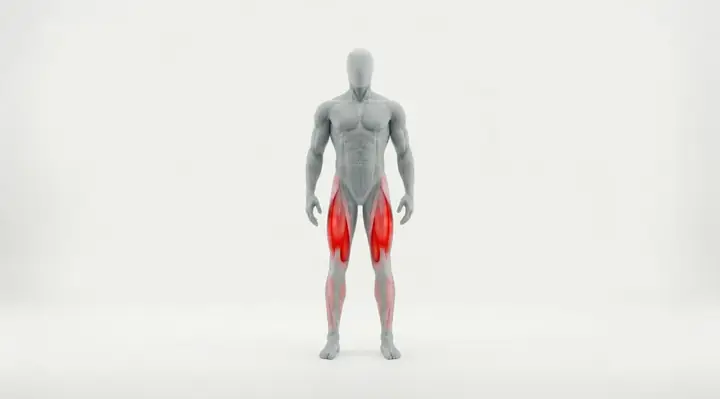 Step 1
-
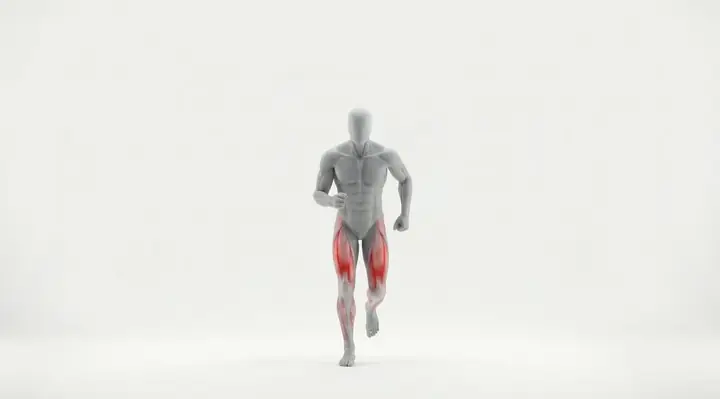 Step 2 You are here
- Single-Leg Bound
- Single-Leg Hop
About the exercise
A single-leg bound is a horizontal plyometric hop done over and over on the same foot. Each takeoff drives the body forward and up; the free leg stays off the floor; the same foot lands and immediately bounds again. Quadriceps, glutes, hamstrings, and calves share the spring. The drill is stiffer and longer than a jog, with a visible flight phase. It sits between a two-foot broad jump and an alternating bound, and is useful in speed, return-to-run, and plyometric progressions.
Updated
Similar exercises
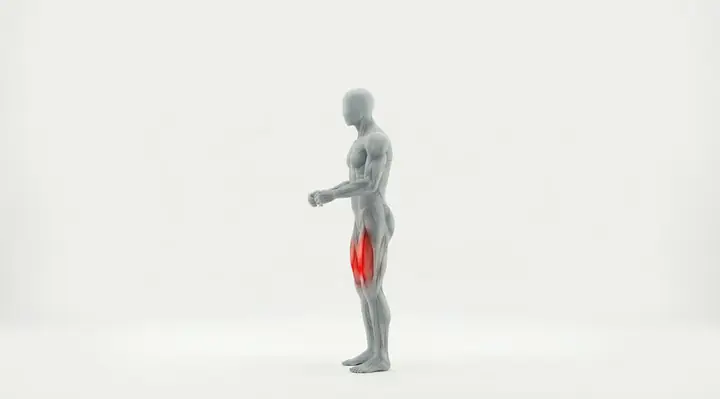
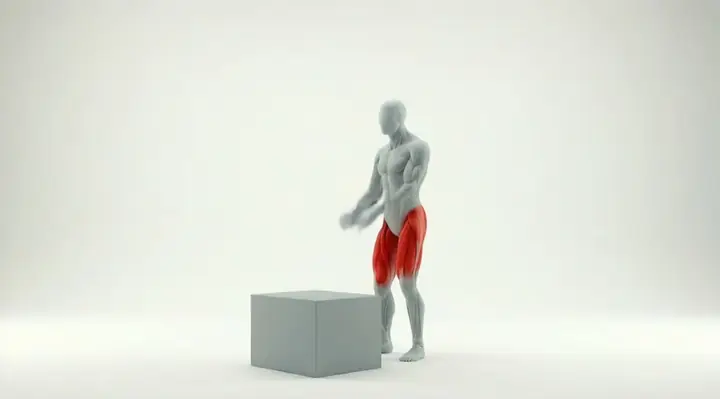
A week of training and meals built for you
Workoutify plans workouts around your days, time and equipment — and a menu for your goal and macros.