Step-Down to Balance
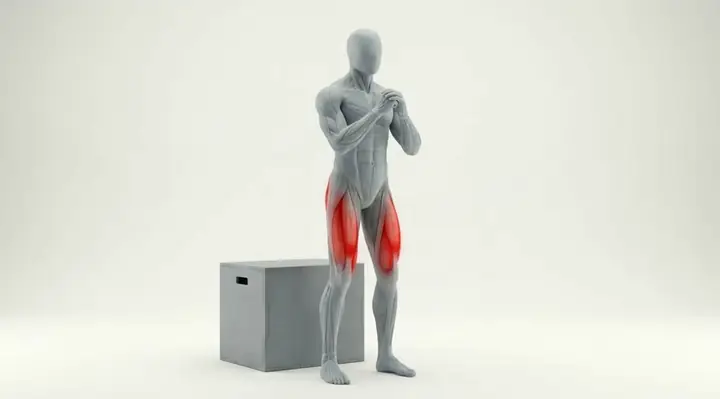
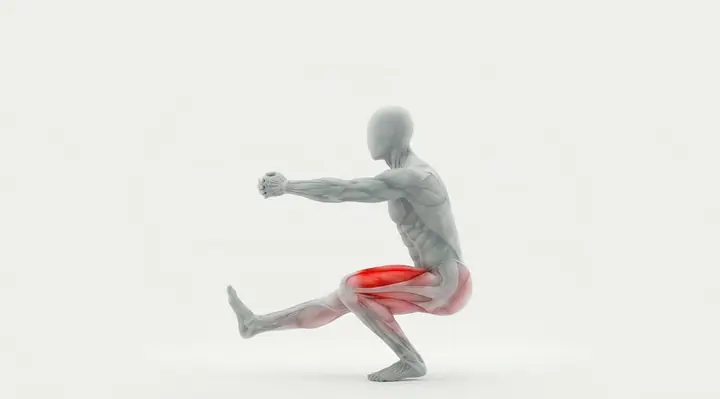
A single-leg lower off a small block: the free heel hovers just above the floor, then the stance leg stands back up.
How to do it
- Stand on a low, stable block with one foot fully on it and the other foot free.
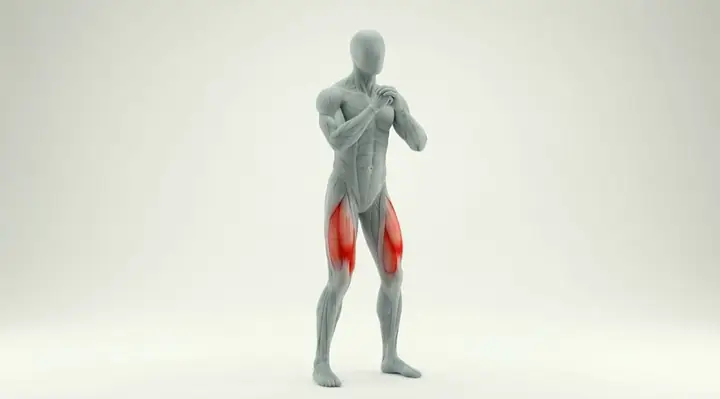
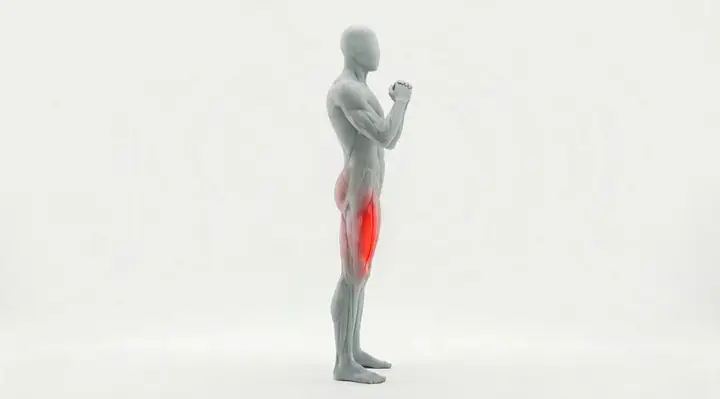
- Clasp the hands in front of the chest and level the hips.
- Bend the stance knee just enough to lower the free heel to a hover above the floor.
- Keep the free toes up so that foot never takes weight.
- Straighten the stance knee to return to the tall start without hopping.
- Stay on the same stance leg for the set, then switch.
Key technique cue
Hover the free heel above the floor without touching; knee stays over the toes.
Common mistakes
- ✕ Letting the free foot tap and take weight; the drill is a hover, not a tap.
- ✕ Dropping the opposite hip as the stance knee bends.
- ✕ Letting the stance knee cave inward off the second toe.
- ✕ Turning the drill into a high-knee march instead of a small, controlled lower.
Benefits
- ✓ Trains eccentric knee control on one leg without a heavy load.
- ✓ The hover keeps balance in the drill, which a tap-and-go step-down can skip.
- ✓ Uses a very low block, so it fits rehab-style progressions before a full box.
Progression: from easier to harder
-
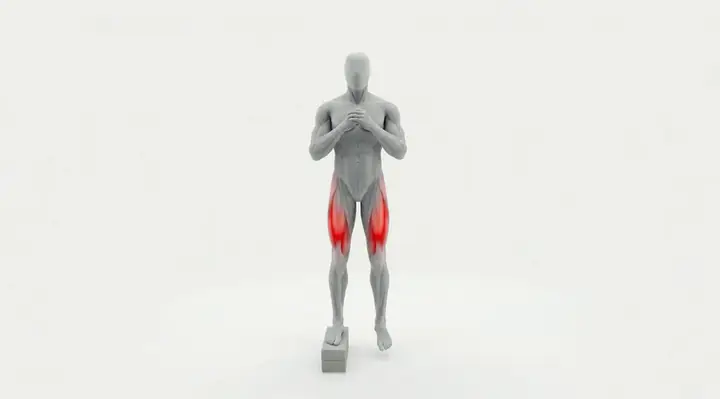 Step 1 You are here
- Step-Down to Balance
-
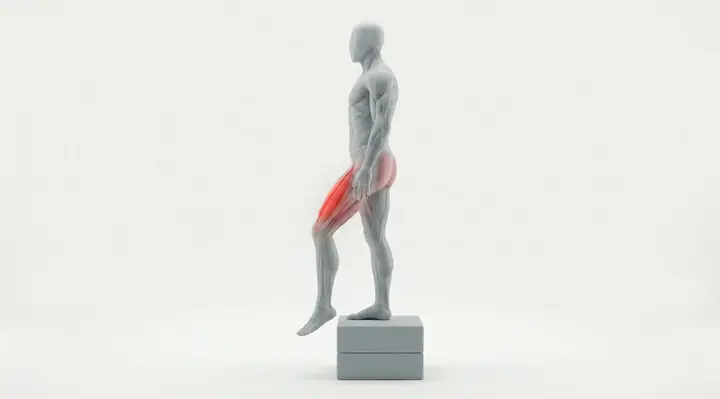 Step 2
About the exercise
Step-down to balance is a slow single-leg lower that never gives the free foot the floor. Stand on a low step, bend the stance knee, drop the free heel toward the floor, and stand back up without handing the work to the free foot. The stance leg's glutes and quads take the descent, which makes it a staple for eccentric knee control. The free heel stays about a centimeter off the floor and is never loaded. It is a balance-biased step-down, not a loaded box step-up.
Updated
Similar exercises
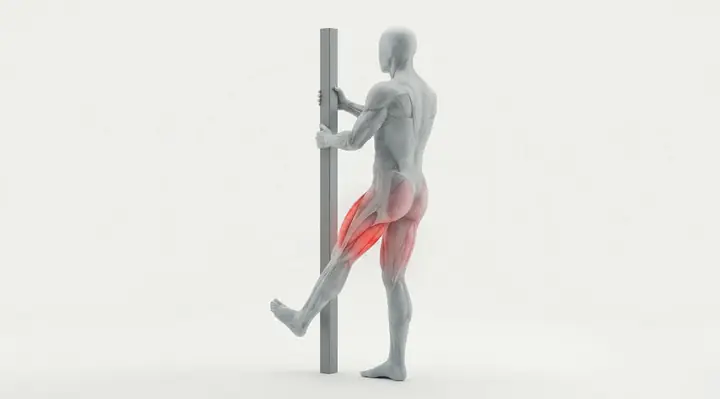
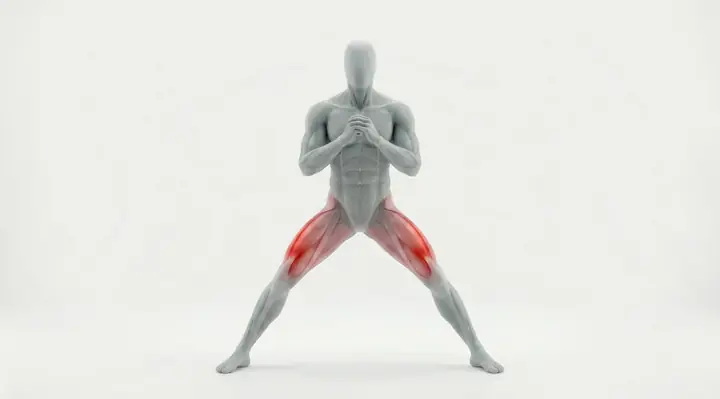
A week of training and meals built for you
Workoutify plans workouts around your days, time and equipment — and a menu for your goal and macros.