TRX Squat
A squat facing an overhead anchor, hands on suspension handles, using the straps for balance rather than as a pull.
How to do it
- Face the overhead anchor and grip one handle in each hand with light tension on the straps.
- Stand with the feet about shoulder-width apart and the chest tall.
- Sit the hips back and down as if onto a chair, knees tracking over the toes.
- Keep the elbows soft so the arms do not pull you out of the squat.
- Drive through the feet to stand, hips and knees extending together.
- Reset the brace at the top, then repeat without yanking on the handles.
Key technique cue
Don't pull on the straps — stand up with your legs, knees over toes.
Common mistakes
- ✕ Pulling on the straps to stand, which turns a squat into an upper-body row.
- ✕ Letting the knees cave inward instead of tracking over the toes.
- ✕ Rounding the back and looking down as the hips drop.
- ✕ Standing so far from the anchor that the straps go slack and give no balance.
Benefits
- ✓ The handles let beginners keep depth and a tall chest without a squat rack.
- ✓ Loads the quads, glutes, and hamstrings with only bodyweight and straps.
- ✓ Scales from assisted sit-backs to a harder lean by changing foot position.
Progression: from easier to harder
-
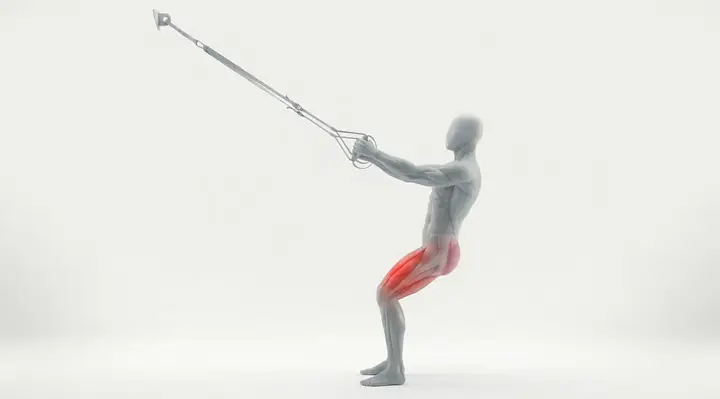 Step 1 You are here
- TRX Squat
- Band Squat
- Bodyweight Box Squat
- Bodyweight Squat
-
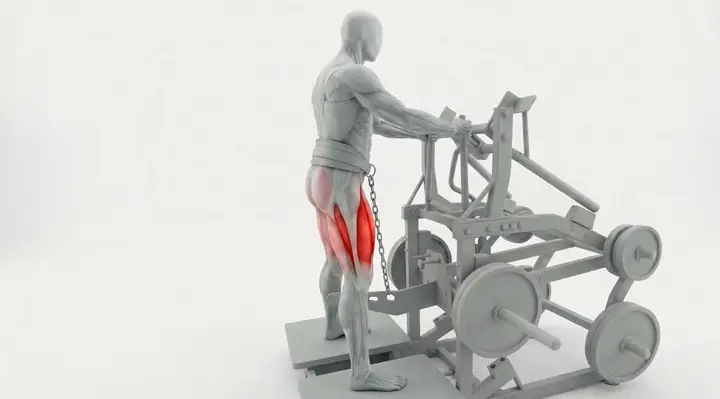 Step 2
-
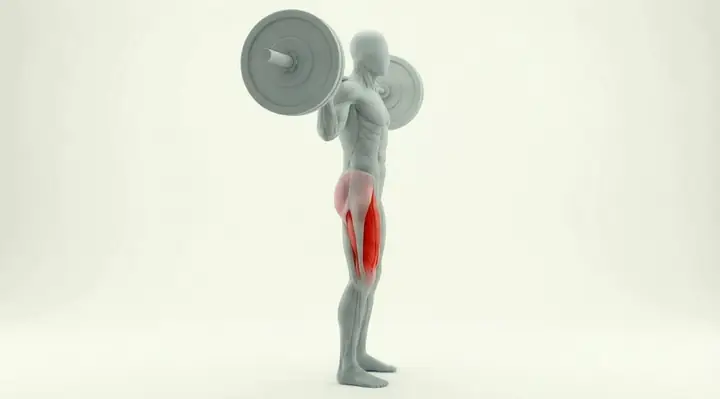 Step 3
-
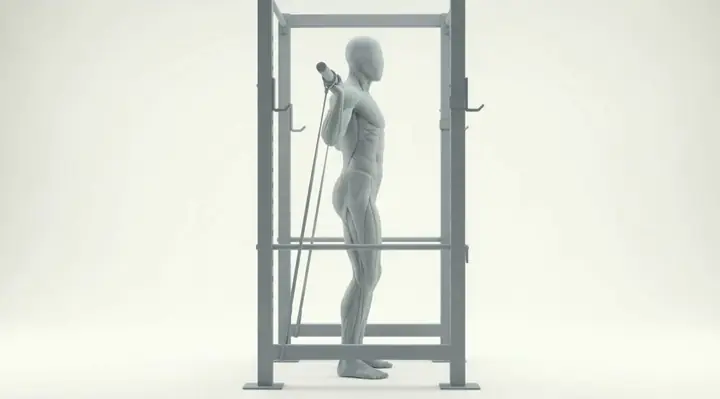 Step 4
About the exercise
The TRX squat is a bodyweight squat with two handles for balance. You face the anchor, take a light grip, sit the hips back and down, then stand. The straps are not there to yank you out of the hole; they let you keep the chest up and the knees tracking while you learn depth. Quads drive the stand; glutes and hamstrings share the hip. Leaning into the straps turns it into an upper-body pull, which is a different drill.
Updated
Similar exercises
A week of training and meals built for you
Workoutify plans workouts around your days, time and equipment — and a menu for your goal and macros.