Weighted Parallel-Bar Straight-Leg Raise
A straight-leg raise from locked parallel bars, with a dumbbell clamped between the feet as extra load.
How to do it
- Lock the elbows on a pair of parallel bars and lift the feet off the floor.
- Clamp a dumbbell between the inner feet so both heads stick out beyond the ankles.
- Brace the trunk and keep the shoulders packed down, not shrugged.
- Keep the knees straight and raise both legs together until they reach about horizontal.
- Pause without swinging or letting the pelvis tuck behind the bars.
- Lower the legs under control until they hang, then reset the brace.
Key technique cue
Knees straight, shoulders down; squeeze the dumbbell, no swinging.
Common mistakes
- ✕ Kipping or swinging the torso to get the loaded legs up.
- ✕ Bending the knees so the drill becomes a weighted knee raise.
- ✕ Letting the dumbbell slip out from between the feet.
- ✕ Shrugging the shoulders and collapsing the lockout on the bars.
Benefits
- ✓ Loads the abs through a long lever without a hanging grip as the limiter.
- ✓ The dumbbell between the feet adds load once an unweighted raise is easy.
- ✓ The bars support the trunk so the set stays a raise, not a swing.
Progression: from easier to harder
-
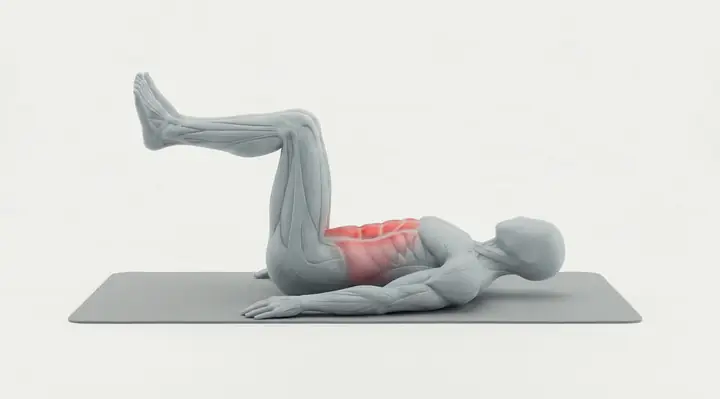 Step 1
-
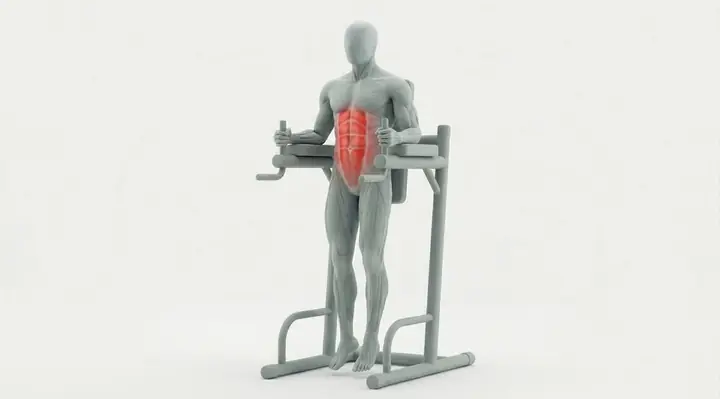 Step 2
-
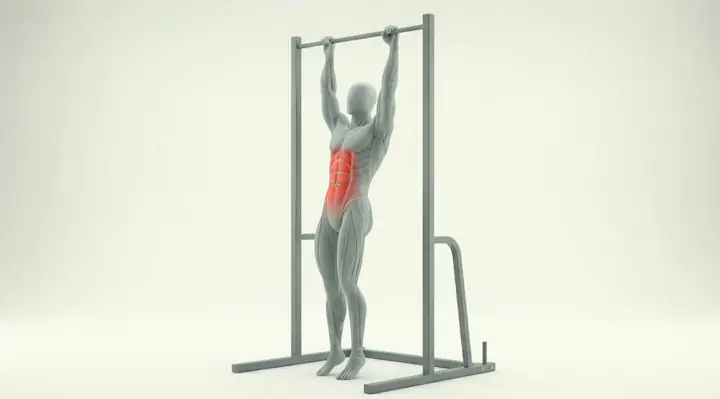 Step 3
-
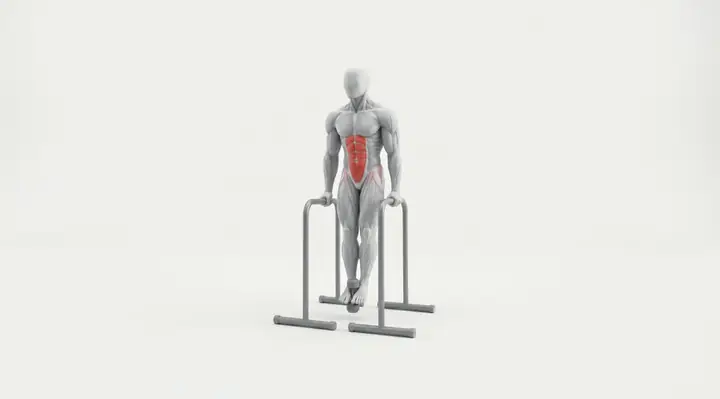 Step 4 You are here
- Weighted Parallel-Bar Straight-Leg Raise
- Toes-to-Bar
About the exercise
The weighted parallel-bar straight-leg raise is a supported hanging raise. You lock out on two dip bars, squeeze a dumbbell between the feet, and lift both straight legs to about horizontal, then lower slowly. Supporting on the bars takes the grip out of the limiter so the abs and hip flexors can do the work. The long lever and the extra load make it harder than a bent-knee raise on the same station.
Updated
Similar exercises

A week of training and meals built for you
Workoutify plans workouts around your days, time and equipment — and a menu for your goal and macros.