Dumbbell Incline Front Raise
A front raise performed face down on an incline bench — isolates the front delts through a fuller range than the standing version.
How to do it
- Set a bench to about 45 degrees and lie face down on it with a dumbbell in each hand.
- Let your arms hang straight toward the floor, palms facing each other, with a slight bend in the elbows.
- Brace your core, press your toes into the floor, and pull your shoulder blades back and down.
- Raise both dumbbells forward in a controlled arc until your arms reach roughly shoulder height.
- Pause briefly at the top with your front delts engaged and your wrists in line with your forearms.
- Lower the dumbbells under control over 2-3 seconds back to the hanging start position.
Key technique cue
Shoulder blades back and down, arc up to shoulder height; don't drop the bells.
Common mistakes
- ✕ Raising the dumbbells too high and letting the traps take over.
- ✕ Bending and straightening the elbows mid-rep, which brings the biceps into the work.
- ✕ Rushing the negative and dropping the dumbbells back to the start, losing most of the muscle tension.
- ✕ Going too heavy, which forces swinging and removes the isolation the bench is meant to provide.
Benefits
- ✓ Isolates the front shoulders through a fuller range than standing raises.
- ✓ Eliminates momentum and torso swing thanks to the chest support.
- ✓ Builds visible front-delt size for an aesthetic shoulder line.
Progression: from easier to harder
-
 Step 1 You are here
- Dumbbell Incline Front Raise
- Cable Front Raise
- Dumbbell Front Raise
- Kettlebell Front Raise
- Plate Front Raise
-
 Step 2
About the exercise
The Dumbbell Incline Front Raise is a front raise performed lying chest-down on an incline bench with the arms hanging straight toward the floor. The bench takes momentum out of the exercise and lets the front shoulders work through a longer range than a standing front raise, making it a stronger isolation for the front delt specifically. It is a clean specialist accessory for any shoulder hypertrophy program. It fits push days, shoulder days, and training aimed at developing the front delt. The chest-supported position also makes it a great choice if you tend to swing standing raises — the bench enforces strict technique automatically.
Updated
Similar exercises
-
 Beginner Dumbbell Seated Overhead Press
-
 Intermediate Arnold Press
-
 Beginner Dumbbell Single Arm Neutral Overhead Press
-
 Beginner Kettlebell Seated Overhead Press
-
 Beginner Side Laterals to Front Raise
-
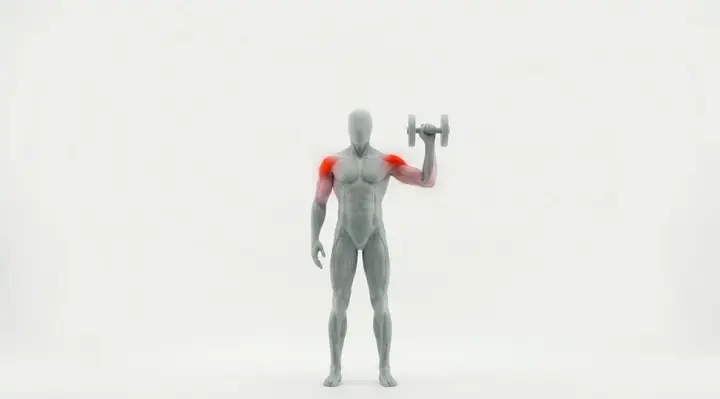 Beginner Single-Arm Dumbbell Overhead Press
-
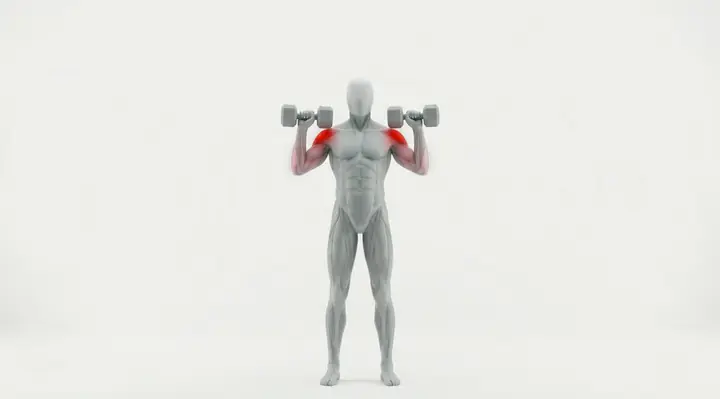 Beginner Standing Alternating Dumbbell Press
-
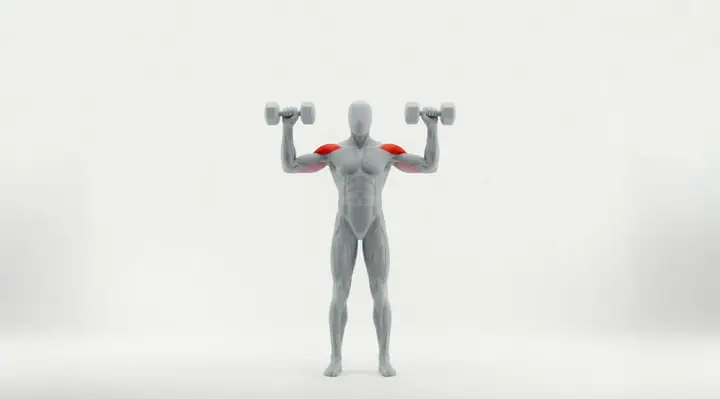 Beginner Standing Dumbbell Press
A week of training and meals built for you
Workoutify plans workouts around your days, time and equipment — and a menu for your goal and macros.