Standing Alternating Dumbbell Press
A standing overhead press with both dumbbells racked, then one arm presses while the other stays at the shoulder.
How to do it
- Stand tall with feet about hip to shoulder width and a pair of dumbbells at the shoulders.
- Turn the palms forward so the handles sit just outside the shoulders, elbows down.
- Brace the trunk so the ribs stay stacked and the low back does not arch.
- Press one dumbbell overhead until the elbow is long, the other bell staying at the shoulder.
- Lower that bell to the rack, then press the opposite arm.
- Keep the head quiet and the torso upright as you alternate.
Key technique cue
One arm presses, the other stays racked; torso upright, hip doesn't shift.
Common mistakes
- ✕ Rotating the palms during the press as in an Arnold press; here the palms face forward from the start.
- ✕ Leaning or hiking the hip toward the working side as that arm goes up.
- ✕ Pressing both bells together; the pattern is one arm, then the other.
- ✕ Letting the head jut forward or the low back dump as the bell reaches lockout.
Benefits
- ✓ Lets each shoulder work on its own while the other side holds a racked load.
- ✓ The standing stance asks the trunk to resist side bend without a bench.
- ✓ Keeps the same overhead path as a two-arm press, so it slots into existing push programs.
Progression: from easier to harder
-
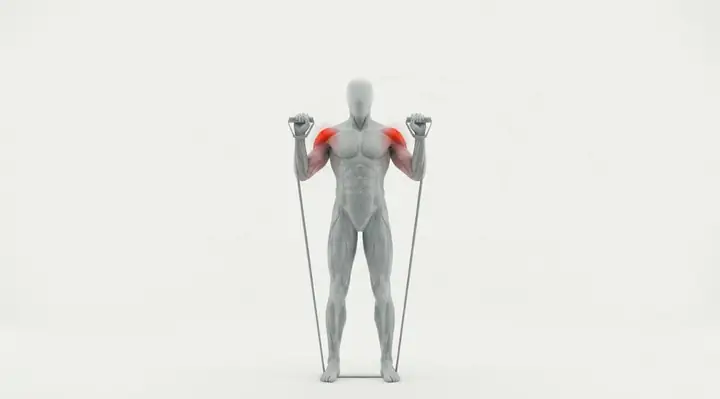 Step 1
-
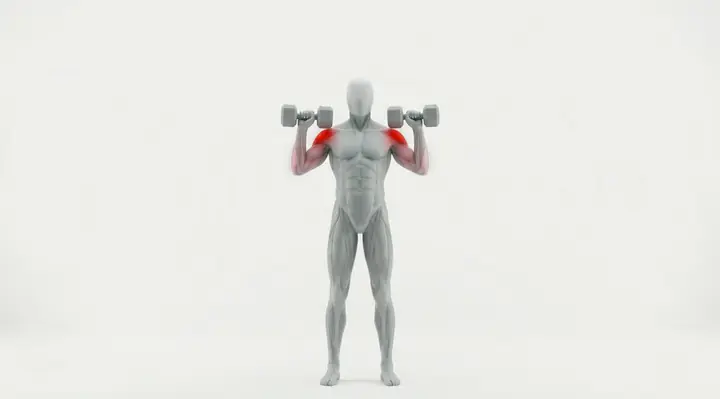 Step 2 You are here
-
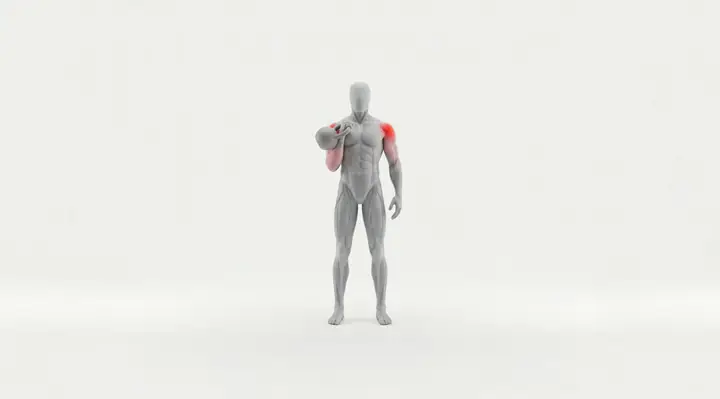 Step 3
About the exercise
The standing alternating dumbbell press is an overhead press done one arm at a time. Both bells start at the shoulders; one arm extends overhead, then lowers, then the other arm goes. The palms face forward, and the other bell stays put at the shoulder while one presses. This is not an Arnold press: the palms do not rotate. It is the unilateral standing press, useful in shoulder blocks and left-right imbalance work.
Updated
Similar exercises
A week of training and meals built for you
Workoutify plans workouts around your days, time and equipment — and a menu for your goal and macros.