Two-Arm Kettlebell Military Press
A strict standing press of two kettlebells from the front rack to an overhead lockout, with no leg drive.
How to do it
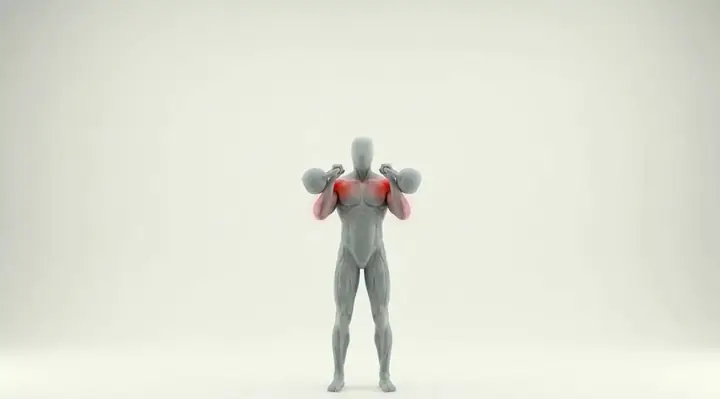
- Clean two kettlebells to the front rack, feet about hip-width apart.
- Brace the midsection, squeeze the glutes, and keep the ribs stacked over the pelvis.
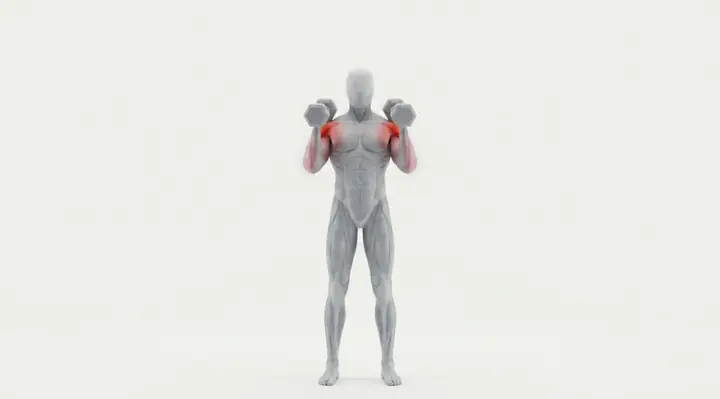
- Rest each bell on the forearm with the wrists stacked and elbows close.
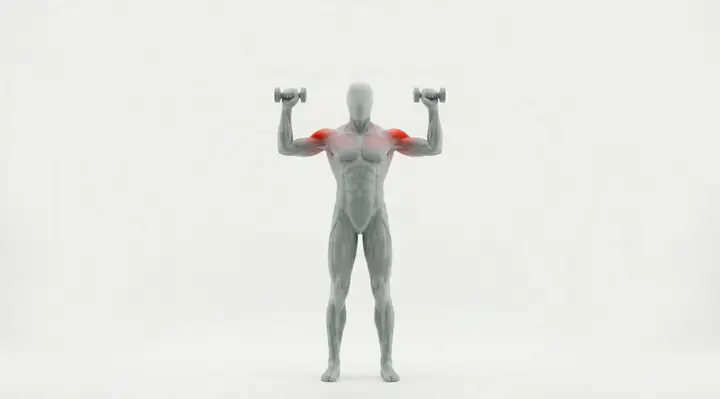
- Press both kettlebells overhead until the elbows lock and the biceps sit by the ears.
- Pause with the shoulders packed, not shrugged up toward the head.
- Lower both bells back to the rack under control, then reset the brace.
Key technique cue
Bells rest on the forearms, elbows close; no knee dip, no back arch.
Common mistakes
- ✕ Dipping the knees into a push press, which takes the work off a strict military press.
- ✕ Letting one arm lock out ahead of the other, which twists the ribcage.
- ✕ Flaring the elbows and collapsing the wrists so the bells drift behind the head.
- ✕ Leaning back to finish the lockout, which dumps load into the lumbar spine.
Benefits
- ✓ Builds bilateral overhead strength with a load that still challenges each shoulder.
- ✓ The kettlebell rack teaches a packed elbow and a quiet trunk before the press.
- ✓ Needs only two bells, so it fits kettlebell-only floors and home setups.
Progression: from easier to harder
-
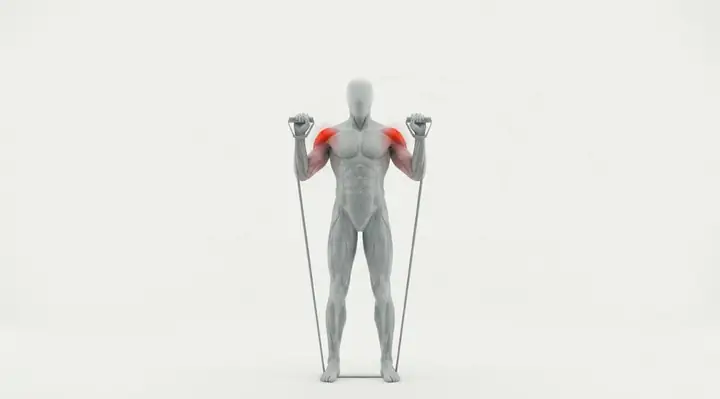 Step 1
-
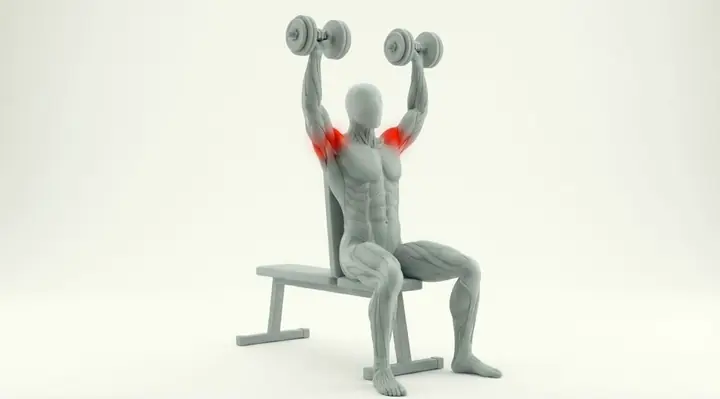 Step 2
-
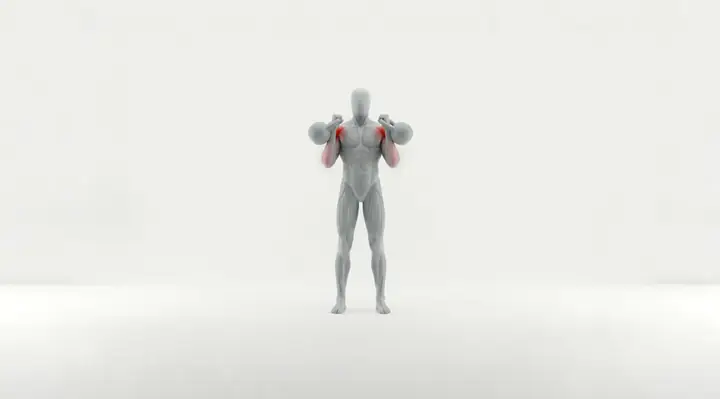 Step 3 You are here
- Two-Arm Kettlebell Military Press
- One-Arm Kettlebell Military Press To Side
- Barbell Overhead Press
- Z Press
About the exercise
The two-arm kettlebell military press is a strict bilateral overhead press. Both bells sit in the front rack, then travel to lockout without a dip of the knees. The offset mass of each kettlebell sits below the handle, so the delts, triceps, and upper traps have to steer a less stable load than a barbell, and the trunk braces against any lean. The path is a press, not a push press.
Updated
Similar exercises
A week of training and meals built for you
Workoutify plans workouts around your days, time and equipment — and a menu for your goal and macros.