Standing Palms-In Dumbbell Press
A standing overhead press with palms facing each other, so the bells travel in a closer, more forward path.
How to do it
- Stand with feet about hip to shoulder width and a dumbbell in each hand.
- Rack the bells at the shoulders with palms facing each other, elbows pointing forward-down.
- Brace the trunk so the ribs stay stacked.
- Press both bells overhead, keeping the palms in and the path slightly in front of the face.
- Lower both bells back to the shoulder rack without flaring the elbows wide.
- Repeat, keeping the wrists stacked over the elbows.
Key technique cue
Palms facing, elbows close to the ribs; path just in front of the face.
Common mistakes
- ✕ Rotating the palms forward mid-rep so it becomes the standard press.
- ✕ Flaring the elbows out wide, which loses the close-grip path.
- ✕ Arching the low back to finish lockout instead of bracing.
- ✕ Letting the bells drift behind the head; with palms in, the path should stay just in front of the face.
Benefits
- ✓ Keeps the upper arms more in front of the body, which many shoulders tolerate better than a wide press.
- ✓ Still trains the delts and triceps through a full overhead lockout.
- ✓ Offers a grip change without changing the movement itself.
Progression: from easier to harder
-
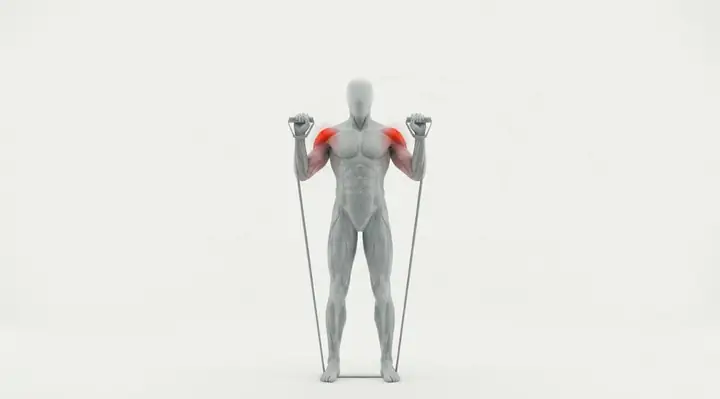 Step 1
-
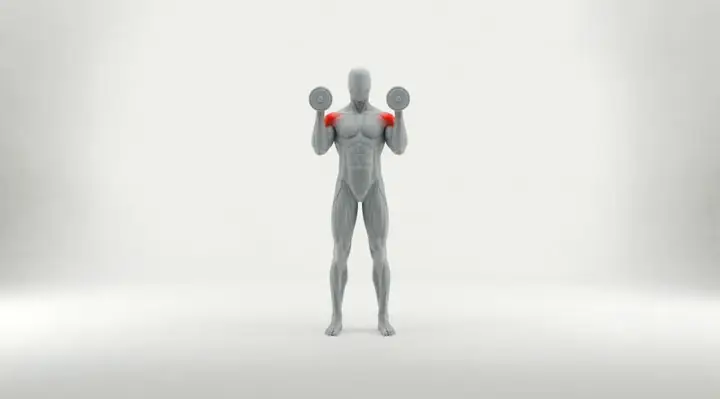 Step 2 You are here
-
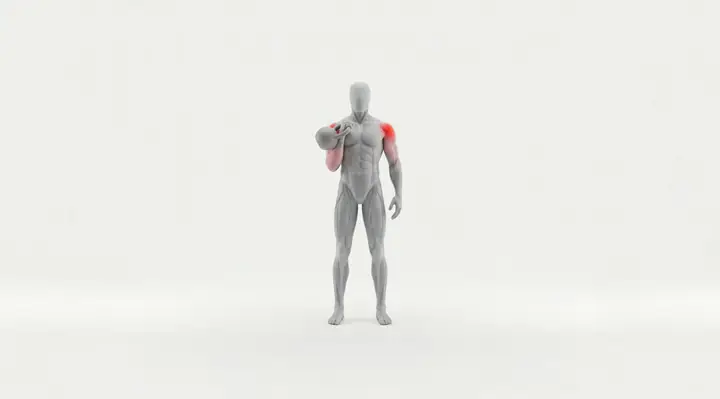 Step 3
About the exercise
The palms-in standing press is the same overhead pattern as a standard dumbbell press, but the handles stay parallel. A palms-facing-each-other grip is a legitimate variation of the same press, with the front deltoid as primary and the triceps and side deltoid helping. The bells start at the shoulders with the elbows closer to the ribs than in the palms-forward press. That is the whole difference. It lets you pick the grip the shoulder actually tolerates.
Updated
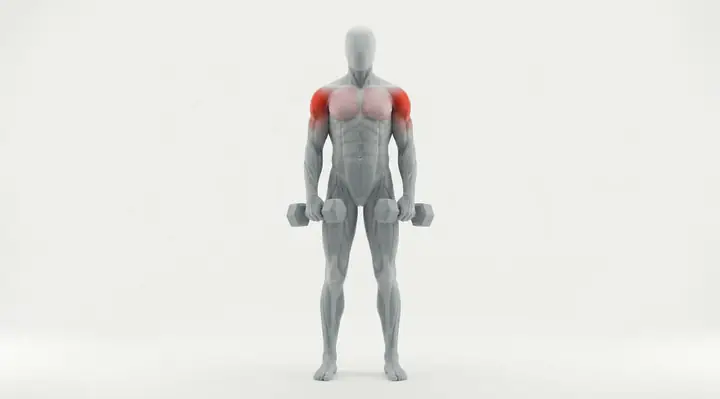
Similar exercises
A week of training and meals built for you
Workoutify plans workouts around your days, time and equipment — and a menu for your goal and macros.