Z Press
Overhead press performed seated on the floor with the legs straight, so the trunk gets no support.
How to do it
- Sit on the floor with your legs straight out in front and your torso upright.
- Take the weight at shoulder height with an overhand grip and your elbows in front.
- Brace your abdominals, squeeze the glutes and tuck the chin slightly.
- Press overhead until the elbows lock and the ears line up with your biceps.
- Pause at lockout with the trunk still vertical.
- Lower back to shoulder height under control without letting the torso lean back.
Key technique cue
Keep the back upright, don't lean back; abs and glutes tight.
Common mistakes
- ✕ Leaning back to start the press, which turns it into an incline press and removes the core demand.
- ✕ Letting the lower back round so the pelvis tips under, which blocks the overhead range.
- ✕ Finishing with the weight in front of the head instead of over it, which loads the front of the shoulder.
- ✕ Loading it like a standing press, which breaks the seated position immediately.
Benefits
- ✓ Trains overhead pressing with no leg drive or bench support available.
- ✓ Forces the trunk and hips to hold a tall seated position under load.
- ✓ Exposes limited overhead range that a standing press can hide with a lean.
Progression: from easier to harder
-
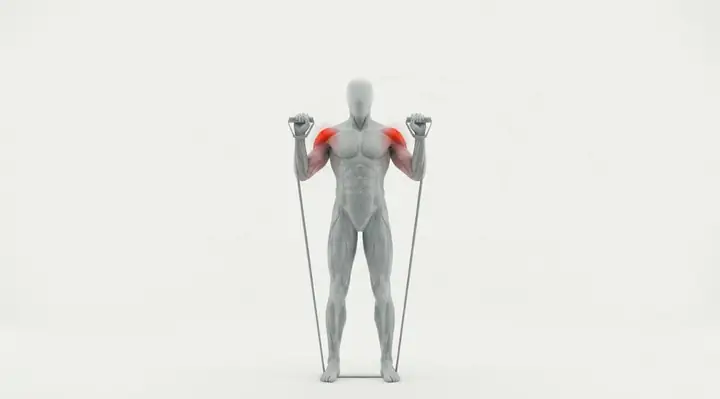 Step 1
-
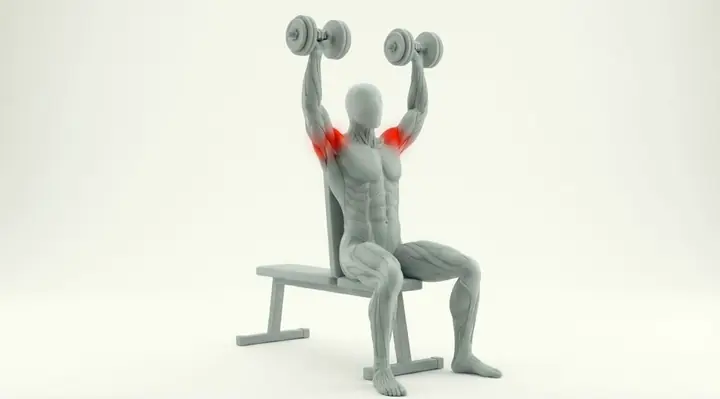 Step 2
-
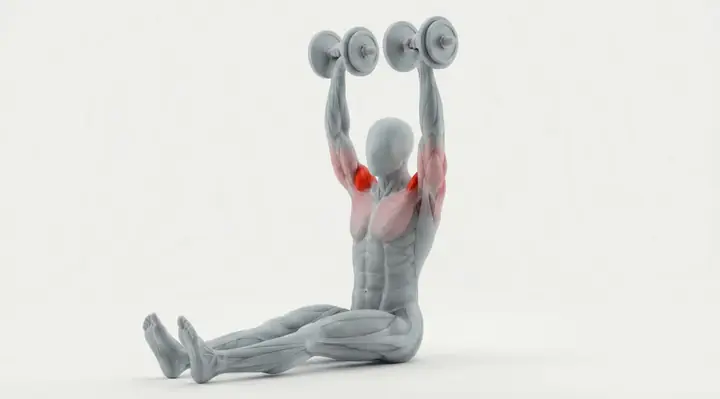 Step 3 You are here
About the exercise
The Z press removes every source of leg drive. You sit on the floor with the legs extended and the torso upright, then press overhead to full lockout and lower under control. Because there is no bench and no knee bend, the trunk and hips have to hold the position while the shoulders do the pressing, which makes it a shoulder lift with a large core demand. The shoulders are the target with the traps and triceps supporting, and the front deltoid is the prime mover.
Updated
Similar exercises
A week of training and meals built for you
Workoutify plans workouts around your days, time and equipment — and a menu for your goal and macros.