Standing Dumbbell Press
A standing two-arm overhead press: palms-forward dumbbells leave the shoulders together and return together.
How to do it
- Stand with feet about shoulder width and a dumbbell in each hand.
- Raise the bells to shoulder height and turn the palms forward.
- Brace the trunk so the ribs stay down and the low back does not dump.
- Press both dumbbells overhead until the elbows are long, without clashing the bells.
- Lower both bells back to the shoulders under control.
- Keep the head quiet and the path vertical as you repeat.
Key technique cue
Ribs down, head still; press both bells up without clashing them.
Common mistakes
- ✕ Letting the head jut forward as the bells reach the top.
- ✕ Arching the low back to finish the lockout instead of bracing the trunk.
- ✕ Turning the palms in during the press, which switches to a neutral grip and a different variation.
- ✕ Locking the elbows so hard that tension leaves the shoulders at the top.
Benefits
- ✓ Builds overhead pressing strength with independent arms, so one side cannot hide.
- ✓ The standing stance asks the trunk to stay stacked without a bench.
- ✓ Uses a full overhead path that seated or barbell versions can shorten.
Progression: from easier to harder
-
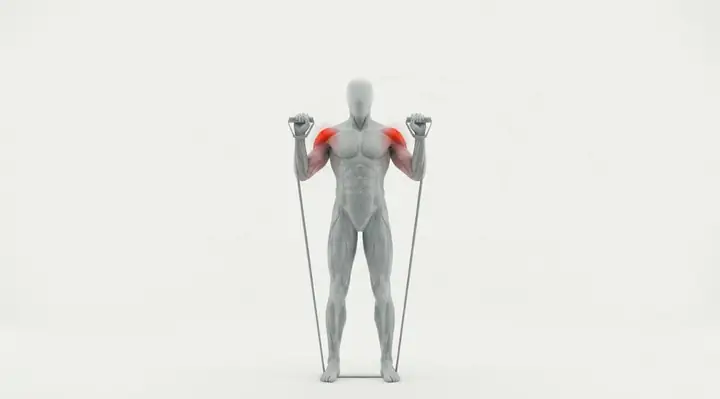 Step 1
-
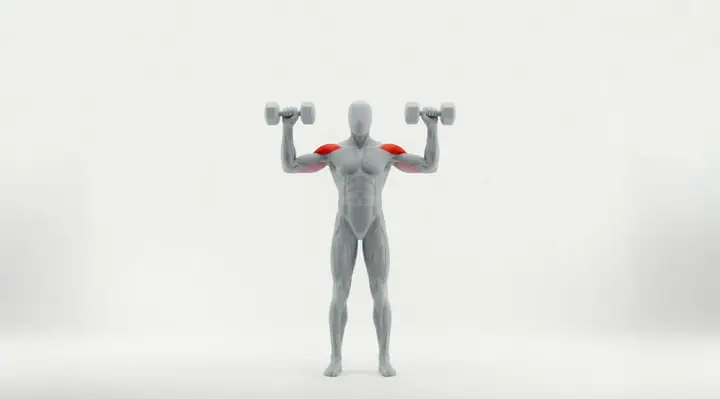 Step 2 You are here
-
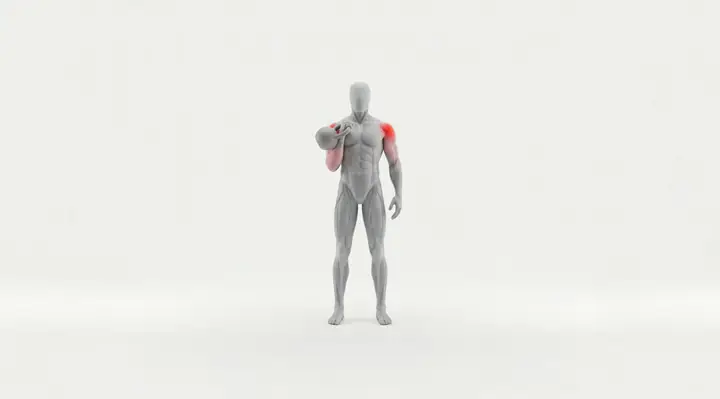 Step 3
About the exercise
The standing dumbbell press is the two-arm overhead press done on the feet. Palms start facing forward at shoulder height; both bells travel overhead, then lower to about a right angle at the elbow. It targets the shoulders with the triceps helping, and the standing version raises trunk demand versus a seated press. It is distinct from the alternating version (one arm at a time) and from the palms-in version (neutral grip). It is the default standing dumbbell press for shoulder and push days.
Updated
Similar exercises
A week of training and meals built for you
Workoutify plans workouts around your days, time and equipment — and a menu for your goal and macros.