Dumbbell Single Arm Upright Row
A standing one-arm vertical pull that leads with the elbow to load the side delts and upper traps.
How to do it
- Stand with your feet about shoulder-width apart holding one dumbbell in an overhand grip.
- Let the weight hang in front of the working thigh with a slight bend in the elbow.
- Keep the torso still and the free arm relaxed at your side.
- Lead with the elbow and pull the dumbbell up along the body.
- Stop when the elbow reaches about shoulder height, higher than the wrist.
- Lower under control to the hang, finish the set, then switch arms.
Key technique cue
Lead with the elbow and keep it above the wrist; stop at shoulder height.
Common mistakes
- ✕ Pulling the dumbbell higher than the chest, which jams the shoulder.
- ✕ Letting the wrist lead so the elbow drops below the forearm.
- ✕ Leaning the torso back to heave the weight up.
- ✕ Using a load so heavy that the path turns into a swing.
Benefits
- ✓ One arm at a time exposes trap and side-delt differences a barbell hides.
- ✓ A dumbbell path is often more comfortable than a fixed barbell upright row.
- ✓ Builds the vertical pull that feeds shrugs and overhead work.
Progression: from easier to harder
-
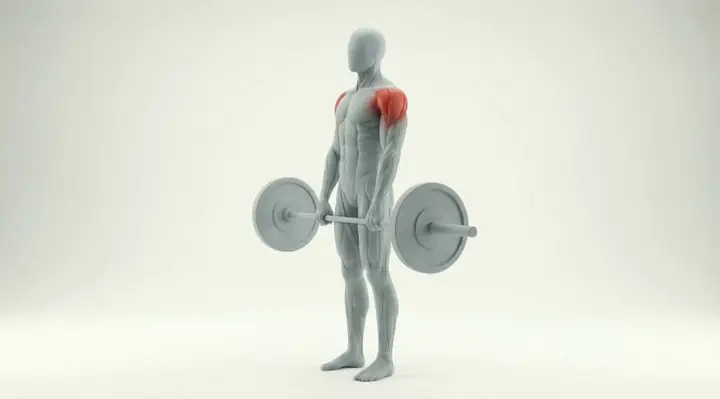 Step 1
-
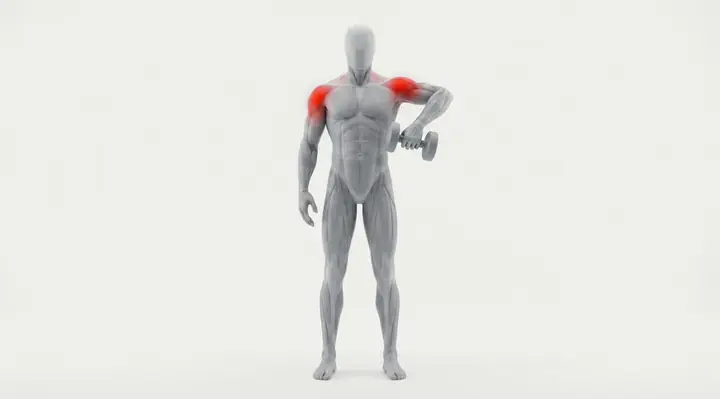 Step 2 You are here
- Dumbbell Single Arm Upright Row
About the exercise
The single-arm dumbbell upright row pulls one weight along the front of the body. From a hang at the thigh with an overhand grip, the elbow leads up and out until it sits at about shoulder height, then the arm lowers under control. The traps are the target with biceps assisting; the lateral deltoid is the other prime mover because the upper arm abducts as it rises. One arm at a time gives a slightly freer path than a barbell upright row and makes left-to-right differences obvious.
Updated
Similar exercises
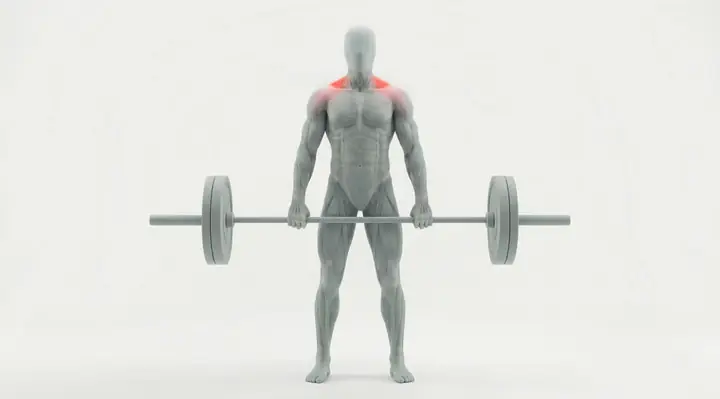
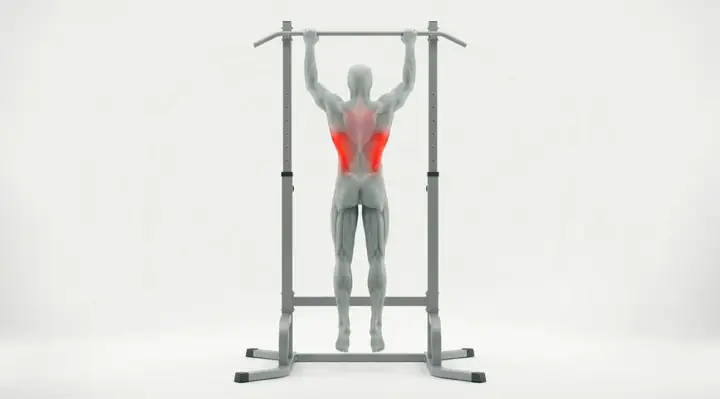
A week of training and meals built for you
Workoutify plans workouts around your days, time and equipment — and a menu for your goal and macros.