Heel and Toe Walks
Gait drill that walks first on the balls of the feet, then back on the heels with the toes lifted.
How to do it
- Stand tall with the feet together and the arms hanging at the sides.
- Rise onto the balls of both feet and walk forward with short steps, heels high.
- Turn around at the end of the lane.
- Pull both toes up and walk back on the heels only, forefeet off the floor.
- Keep the torso upright and the steps short during both phases.
- Do not roll through a normal heel-to-toe gait in either half.
Key technique cue
Short steps, no rolling through the foot: stay on toes or on heels the whole way.
Common mistakes
- ✕ Letting the heels kiss the floor during the toe-walking phase.
- ✕ Dropping the toes during the heel-walking phase so it becomes a normal walk.
- ✕ Leaning the trunk back to fake more dorsiflexion.
- ✕ Taking long strides that force a heel-to-toe roll.
Benefits
- ✓ Trains the calves and the tibialis in one drill, in the way gait actually uses them.
- ✓ Needs no equipment, so it fits warm-ups and rehab-adjacent ankle work.
- ✓ Gives runners a walking drill instead of another standing raise.
About the exercise
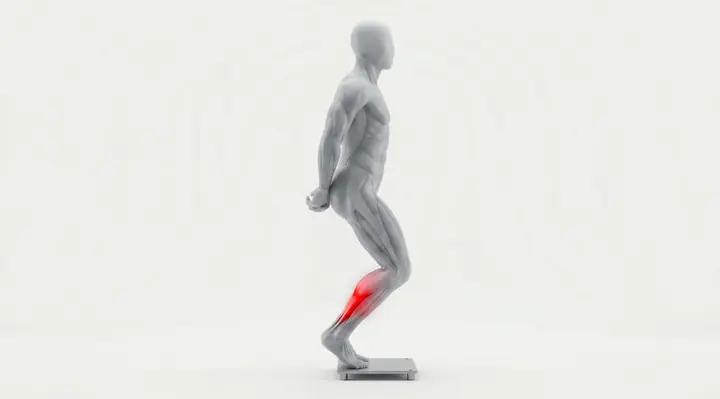
Heel and toe walks split lower-leg work into two gaits. The heel walk keeps all the weight on the heels with the toes pulled up, loading the tibialis anterior and building shin endurance. The same heel walk is a dorsiflexion drill that also stretches the calves, while the reverse gait, walking on the balls of the feet with the heels high, loads the gastrocnemius and soleus. The drill starts with both soles flat, then walks forward on the toes, turns, and returns on the heels with the forefeet visibly up. This is the two-phase gait drill, not a standing calf raise or a wall tibialis raise, and it suits ankle-prehab blocks, running warm-ups, and gait-retraining work that needs both plantarflexion and dorsiflexion trained as walking.
Updated
Similar exercises
A week of training and meals built for you
Workoutify plans workouts around your days, time and equipment — and a menu for your goal and macros.