Pogo Hops
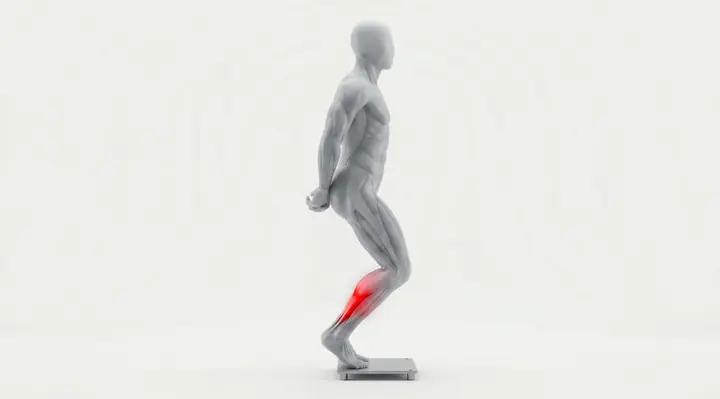
Low, quick in-place hops on stiff ankles, using the calves and Achilles as a spring with almost no knee bend.
How to do it
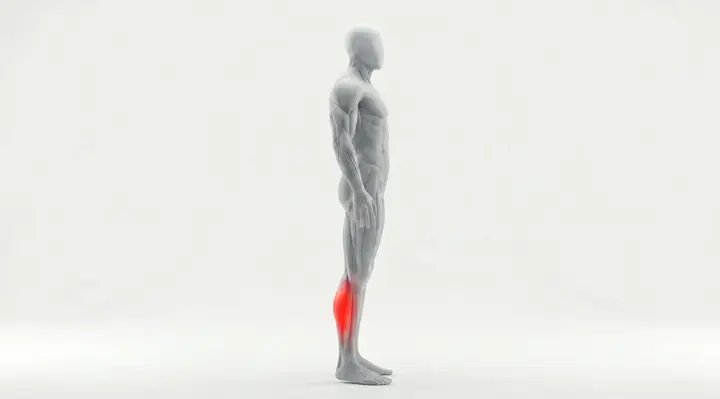
- Stand tall with the feet hip-width and the arms relaxed at your sides.
- Rise onto the balls of the feet with the knees almost straight.
- Hop in place by pushing through the ankles, not by sitting into a squat.
- Pull the toes toward the shins in the air so the next contact is springy.
- Land quietly under the hips and rebound right away.
- Keep the torso tall and repeat for short, fast contacts.
Key technique cue
Knees nearly straight — hop from the ankles, don't squat.
Common mistakes
- ✕ Bending the knees into a mini squat so the hop is no longer ankle-dominant.
- ✕ Chasing height instead of a low, quick pop off the floor.
- ✕ Letting the heels slam and dump the spring out of the Achilles.
- ✕ Reaching the feet out in front of the hips on landing.
Benefits
- ✓ Trains ankle stiffness and short ground contacts without a high jump.
- ✓ Lets coaches keep plyometric work in a heavy week at a low amplitude.
- ✓ Is an entry drill before higher-impact hops and bounds.
About the exercise
Pogo hops are a low-amplitude plyometric. You bounce in place on the balls of the feet with the knees almost straight so the ankle, not a deep squat, produces the rebound. Pogo variants isolate the ankle, overload the Achilles, and keep contact times short. Two-leg pogo jumps are programmed as a max-velocity plyometric with stiff ground contacts, and pogo jumps sit among low-impact entries in a plyometric mesocycle.
Updated
Similar exercises



A week of training and meals built for you
Workoutify plans workouts around your days, time and equipment — and a menu for your goal and macros.