Cable Rope Pullover
Straight-arm cable pullover with a rope that extends the shoulders and drives the lats through a long range.
How to do it
- Attach a rope to a high cable pulley and select a moderate load.
- Take one rope end in each hand with a neutral grip and step back until the cable is taut.
- Hinge slightly at the hips, brace your abdominals, and set your arms overhead with elbows nearly straight.
- Depress your shoulder blades, then pull the rope down in an arc toward your thighs.
- Finish with the hands beside your hips and hold the lat contraction for a beat.
- Let the rope travel back overhead under control until you feel the lats lengthen, then repeat.
Key technique cue
Elbows nearly straight, don't arch: sweep the rope to the hips.
Common mistakes
- ✕ Bending the elbows turns the pullover into a triceps pushdown and removes the lats from the movement.
- ✕ Letting the lower back arch as the arms go overhead shifts the load onto the spine instead of the lats.
- ✕ Standing too close to the stack cuts the overhead range short, so the lats never reach a stretched position.
- ✕ Gripping the rope hard and leading with the arms lets the biceps dominate a movement meant for the back.
Benefits
- ✓ Trains the lats through pure shoulder extension with no elbow flexion to steal the work.
- ✓ Keeps cable tension on the back in the stretched overhead position where free weights go slack.
- ✓ Teaches shoulder blade depression, which transfers directly to pulldowns and rows.
Progression: from easier to harder
-
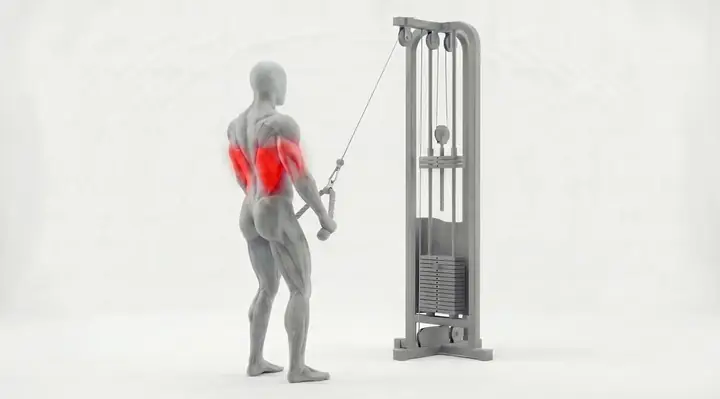 Step 1 You are here
- Cable Rope Pullover
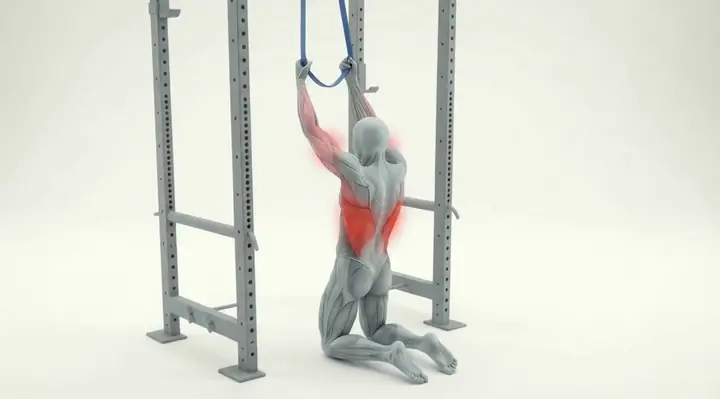
- Band Pullover
- Machine Lat Pullover
About the exercise
The cable rope pullover is a straight-arm shoulder extension performed against a high cable with a rope attachment. The elbows stay almost locked, so the latissimus dorsi pulls the upper arms from overhead down to the thighs rather than the biceps bending the arm. Rear deltoid, the long head of the triceps and the abdominal wall assist. Shoulder position matters more than load. Latissimus activity is highest at lower shoulder elevation angles, so the useful work happens between overhead and hip level with depressed shoulder blades.
Updated
Similar exercises
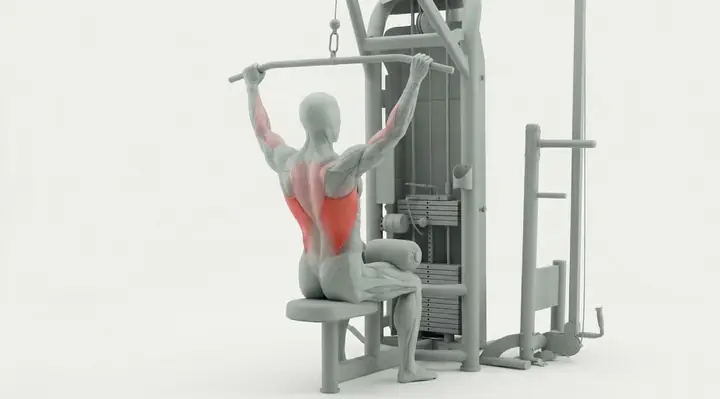
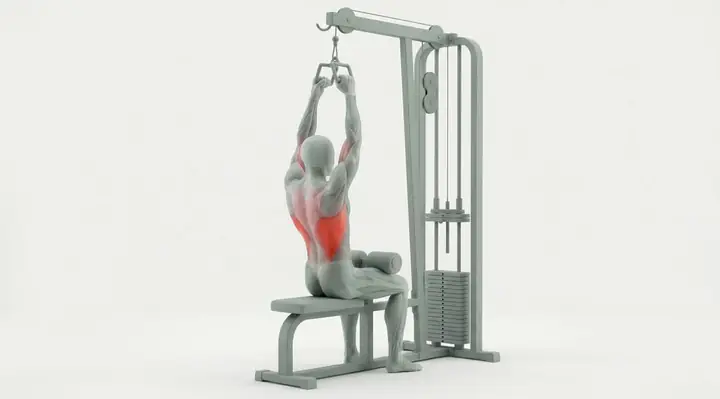
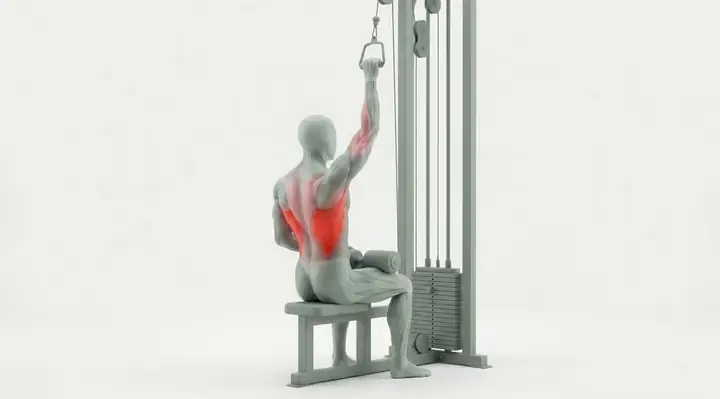
A week of training and meals built for you
Workoutify plans workouts around your days, time and equipment — and a menu for your goal and macros.