Lat Pulldown
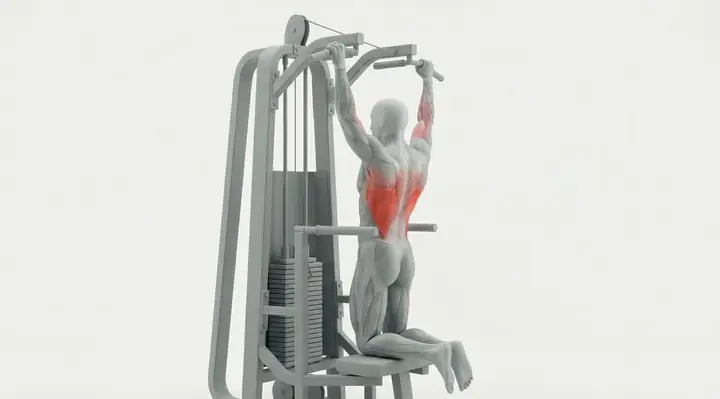
A seated cable pulldown that takes the bar to the upper chest, loading the lats through a full vertical pull.
How to do it
- Attach a wide bar to the high pulley and set the thigh pad snug.
- Sit down and take the bar with palms forward, hands outside your shoulders.
- Sit tall with a slight backward lean and your arms fully extended.
- Pull your shoulder blades down before you bend your elbows.
- Draw the bar to your upper chest and pause with the lats contracted.
- Let the bar rise slowly to full arm extension and repeat.
Key technique cue
Blades down first, bar to the upper chest, never behind the head.
Common mistakes
- ✕ Leaning far back and turning the pulldown into a row, which shifts load off the lats.
- ✕ Shrugging the shoulders up at the start, so the traps take over before the lats engage.
- ✕ Letting the bar snap back to the top, which skips the loaded stretch.
- ✕ Pulling the bar behind the neck, which forces end-range shoulder rotation for no extra lat work.
Benefits
- ✓ Trains the full vertical pull without needing bodyweight pull-up strength.
- ✓ Load adjusts in small steps, so progression is easy to program.
- ✓ The seated position keeps the torso stable and the lats loaded.
Progression: from easier to harder
-
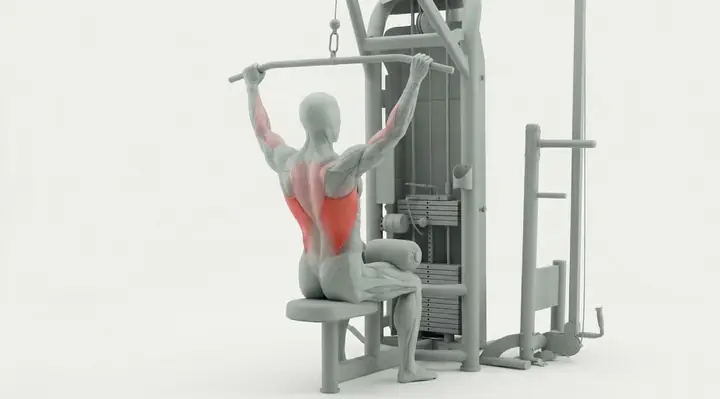 Step 1 You are here
-
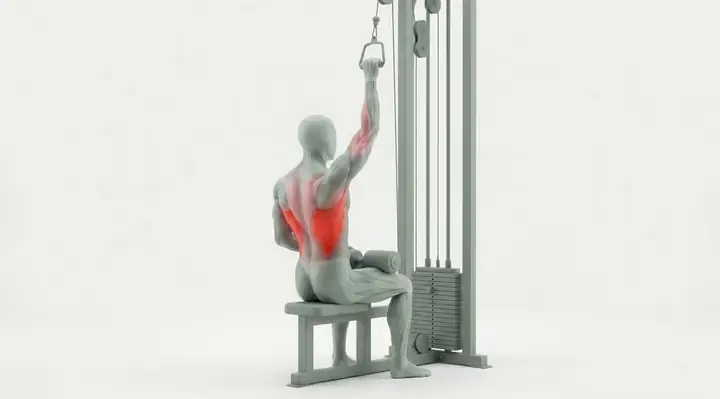 Step 2
About the exercise
The lat pulldown is the seated cable analog of a pull-up. With the knees fixed under the pad and an overhand grip just outside shoulder width, you depress the shoulder blades, then flex the elbows and extend the shoulders until the bar reaches the upper chest. The latissimus dorsi and teres major drive it while the biceps, rhomboids, mid and lower traps and rear delts assist. EMG work across seven grip and trunk-angle variants found lat activation barely differed between them, so grip choice changes the assisting muscles more than the lats.
Updated
Similar exercises
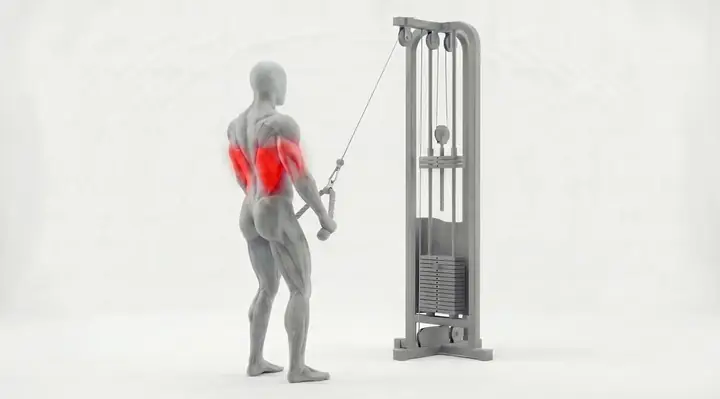
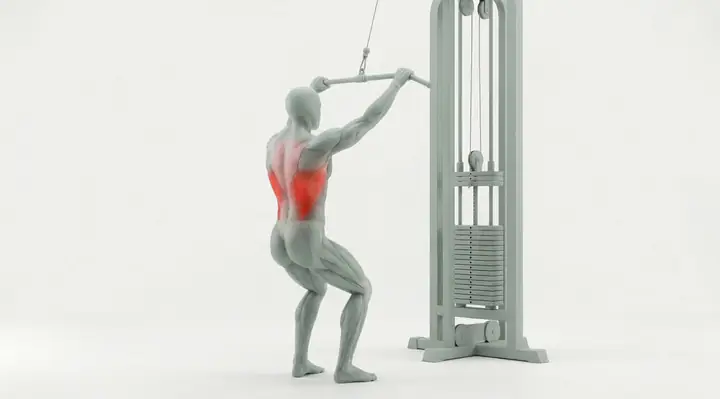
A week of training and meals built for you
Workoutify plans workouts around your days, time and equipment — and a menu for your goal and macros.