Single-Arm Lat Pulldown
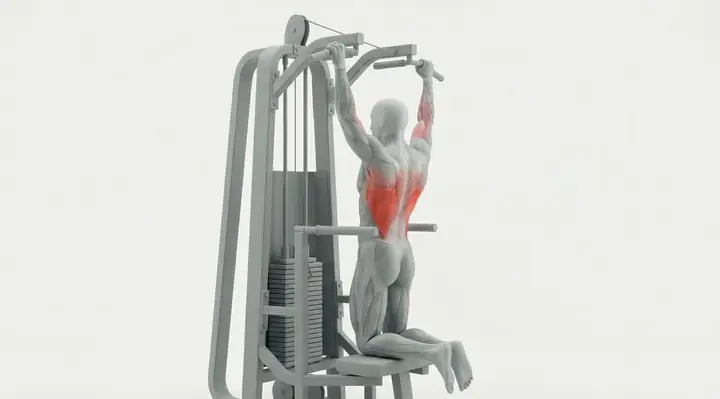
One-arm cable pulldown that loads a single lat and lets the shoulder blade travel through its full range.
How to do it
- Set a single handle on a high pulley and choose a load you can control through the full range.
- Kneel or sit facing the stack with the working shoulder lined up under the cable.
- Reach up and let the shoulder blade rise, keeping your ribs down and your abs braced.
- Depress the shoulder blade first, then drive the elbow down and back toward your hip.
- Pause where the lat is fully shortened and hold the torso square to the stack.
- Return slowly to a full overhead stretch, finish the reps, then switch sides.
Key technique cue
Drop the shoulder blade first, then drive the elbow to the hip — don't lean back.
Common mistakes
- ✕ Leaning away from the stack to finish the rep, which turns the pull into a body swing and unloads the lat.
- ✕ Starting with the arm rather than the shoulder blade, which hands the work to the biceps.
- ✕ Cutting the return short, so the lat never reaches the stretched position that the single handle allows.
- ✕ Twisting the trunk toward the cable, which hides the side-to-side difference this variation exists to expose.
Benefits
- ✓ Trains each side separately so strength differences surface instead of being masked.
- ✓ Allows more scapular travel at the top than a fixed bar.
- ✓ Loads a vertical pull in small increments for users without pull-up strength.
Progression: from easier to harder
-
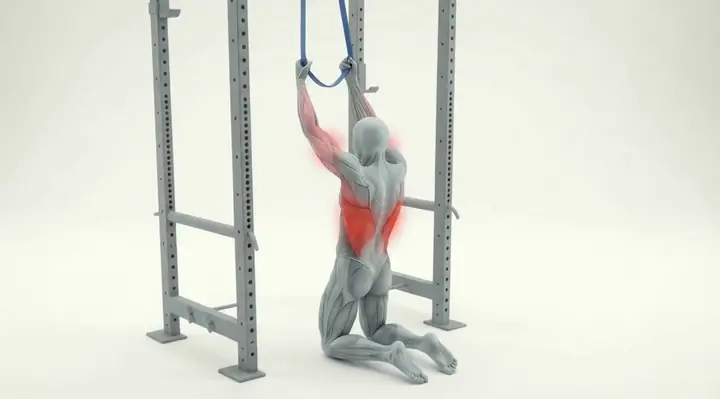 Step 1
-
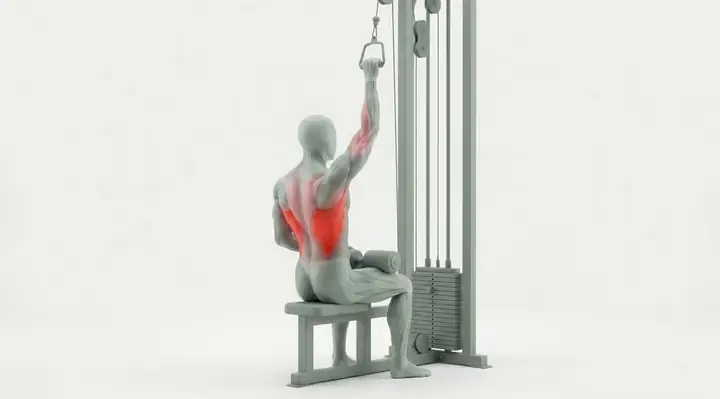 Step 2 You are here
- Single-Arm Lat Pulldown
About the exercise
The single-arm lat pulldown swaps the fixed bar for one handle on a high pulley, so each side works on its own and the shoulder blade is free to rise, depress and rotate without the other arm covering for it. The latissimus dorsi is the prime mover, with the biceps, posterior deltoid, trapezius and rhomboids assisting and the trunk resisting the pull toward the stack. EMG work across seven pulldown grips found the lats stay the primary target whatever the handle, so the case for the unilateral version is side-to-side control and range, not a different muscle. It is a corrective, accessible vertical pull: it suits imbalance work and gives a scalable pull for people who cannot yet do pull-ups.
Updated
Similar exercises
A week of training and meals built for you
Workoutify plans workouts around your days, time and equipment — and a menu for your goal and macros.