Cable High-to-Low Fly
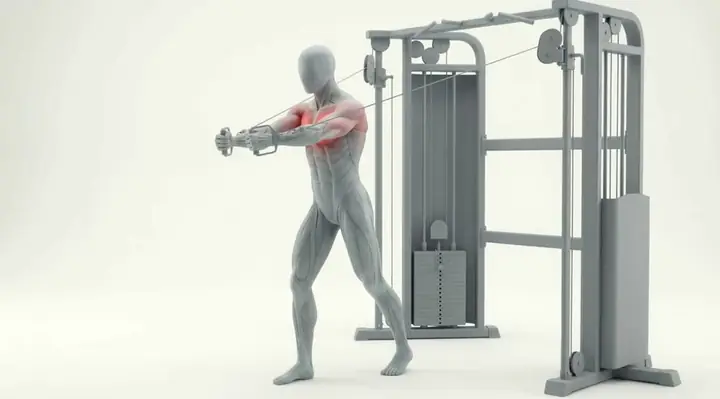
Standing cable fly that sweeps both handles down and together from high pulleys to load the lower chest.
How to do it
- Set both cable pulleys to their highest position and select a light load on each side.
- Take one handle in each hand with a neutral grip and step forward into a split stance.
- Brace your abdominals, hold your torso upright, and keep a slight bend in both elbows.
- Sweep both hands down and together in a wide arc until they meet in front of your hips.
- Hold the squeeze for a beat without letting the two handles touch.
- Let your arms open back out under control until you feel a stretch across the chest, then repeat.
Key technique cue
Keep a soft, fixed elbow bend — don't clank the handles or lean forward.
Common mistakes
- ✕ Bending and extending the elbows turns the fly into a press, so the triceps take load the chest should carry.
- ✕ Leaning the torso forward over the front foot increases shoulder joint stress and usually means the load is too heavy.
- ✕ Banging the handles together at the bottom lets the pecs unload at the point of peak contraction.
- ✕ Squeezing the handles hard pulls the forearms and biceps in first and blunts the chest contraction.
Benefits
- ✓ Holds tension on the pectorals through the full arc, including the shortened position.
- ✓ Emphasizes the lower chest through a downward adduction path that flat pressing does not reproduce.
- ✓ Needs no spotter and no bar to unrack, so it programs safely at the end of a session.
Progression: from easier to harder
-
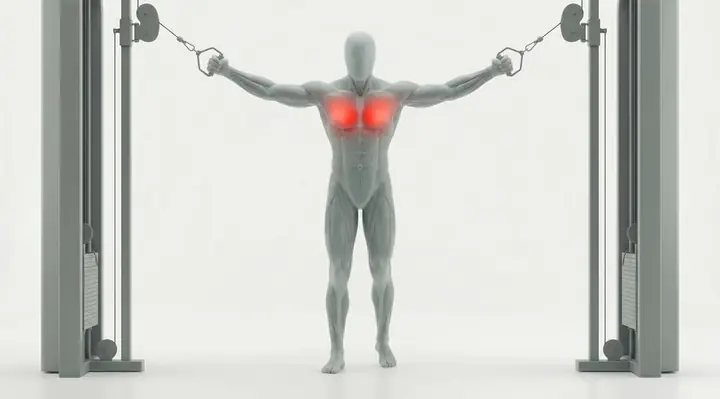 Step 1 You are here
- Cable High-to-Low Fly
- Cable Pec Fly
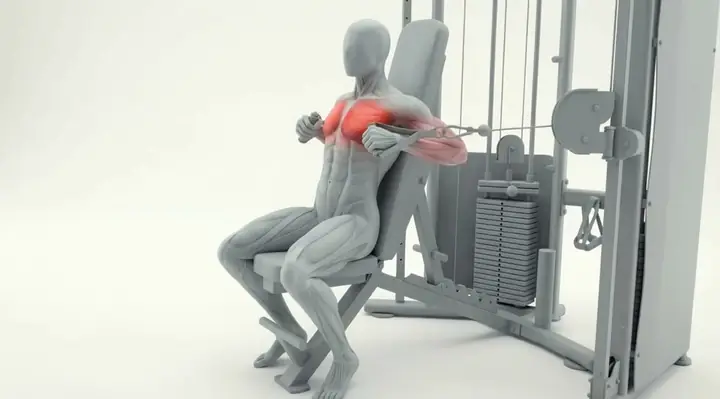
- Machine Pec Fly
-
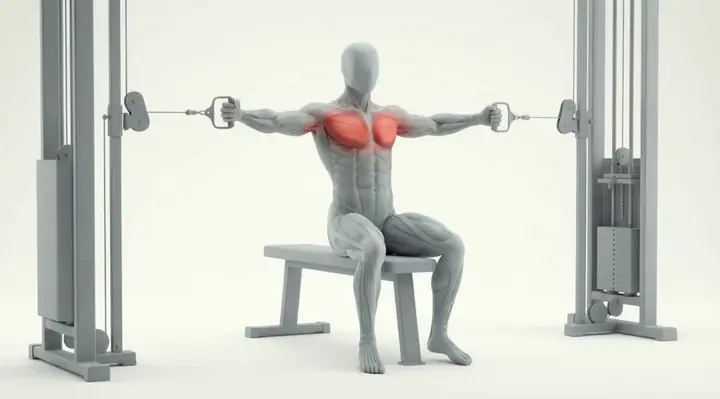 Step 2
-
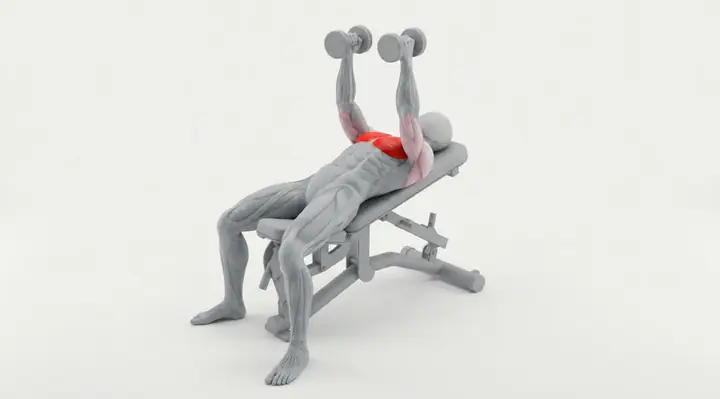 Step 3
About the exercise
The cable high-to-low fly is a single-joint chest movement performed between two pulleys set at their highest position. You keep the elbows fixed and slightly bent, moving only at the shoulder until both hands meet in front of the hips. That downward adduction path emphasizes the lower, sternal region of the pectoralis major, with the front deltoid and triceps assisting. Because the resistance pulls from above, tension stays on the chest across the whole arc instead of dropping off near the top the way a dumbbell fly does. It is the default lower-chest isolation fly, distinct in angle from the flat and low-to-high versions.
Updated
Similar exercises
A week of training and meals built for you
Workoutify plans workouts around your days, time and equipment — and a menu for your goal and macros.